
A NEMA 14-50 is a heavy-duty, 240-volt electrical outlet that requires a 50-amp dedicated circuit. It can continuously deliver up to 40 amps of power to an EV charger, adding roughly 25 to 35 miles of range per hour of charging. Many homeowners choose this outlet to get Level 2 charging speeds without the commitment of hardwiring a permanent charging station to their wall.
Quick answer
A NEMA 14-50 outlet is a highly effective way to power a home EV charger. You must use a commercial-grade receptacle and exact torque settings to prevent melting under continuous loads.
- Best for flexibility: Plug-in EV chargers, letting you take the unit on road trips.
- Best for reliability: Hardwired chargers, which bypass nuisance tripping issues common with GFCI breakers.
- A 50-amp circuit safely delivers a maximum of 40 amps to an EV charger due to the 80% rule.
- Standard $15 hardware store outlets often melt under continuous EV charging loads.
- Industrial-grade receptacles (like Hubbell or Bryant) are required for safety.
- NEC 2020 rules require GFCI breakers for 240V garage outlets, which can cause nuisance tripping with plug-in chargers.
- Installing this circuit typically requires heavy, stiff 6 AWG copper wiring.
- What is a NEMA 14-50 outlet and why is it used for EV charging?
- What is the difference between an industrial-grade and residential-grade NEMA 14-50 outlet?
- Should I buy a NEMA 14-50 outlet from Lowe’s or Home Depot?
- What wire size and breaker do I need for a 50-amp EV circuit?
- How do you install a NEMA 14-50 outlet for EV charging?
- Can I install a NEMA 14-50 outlet for EV charging outdoors?
- Does a NEMA 14-50 outlet require a GFCI breaker for an EV charger?
- Is it better to use a NEMA 14-50 outlet or hardwire my EV charger?
- Safety checklist for existing NEMA 14-50 outlets
- What do owners say?
- Frequently Asked Questions
What is a NEMA 14-50 outlet and why is it used for EV charging?
A NEMA 14-50 is a common 240-volt receptacle. Historically, builders installed these outlets to power large electric ranges and RV hookups. Today, they are the standard plug type for high-powered, portable electric vehicle chargers.
Using one provides Level 2 charging speeds. This is a massive upgrade over a standard 120-volt wall plug. However, the numbers on the outlet can confuse new owners. The “50” in 14-50 stands for 50 amps. But you cannot actually charge your car at 50 amps.
Under the National Electrical Code (NEC), an EV charger is classified as a continuous load because it pulls power for more than three hours at a time. The NEC 80% rule states that continuous loads can only use 80% of a circuit’s maximum rating. Therefore, a 50-amp circuit can safely deliver a maximum of 40 amps to an electric vehicle.
Charging at 40 amps on a 240V circuit yields approximately 9.6 kW of power. If you charge your car for four hours at that speed, you use 38.4 kilowatt-hours (kWh) of electricity. Based on the US national average electricity price of roughly 17 cents per kWh, a four-hour charging session costs about $6.52. That session will add roughly 120 miles of driving range to most modern EVs.
What is the difference between an industrial-grade and residential-grade NEMA 14-50 outlet?
The difference comes down to contact thickness, heat tolerance, and build materials. A residential-grade outlet is built for electric ovens. An oven cycles on and off. It pulls high power for a few minutes to heat up, then drops the power load to maintain the temperature. The outlet has time to cool down.
An EV charger pulls maximum power continuously for up to ten hours. Cheap residential outlets cannot handle this constant heat. The internal metal contacts expand and contract, loosening their grip on the plug prongs. Resistance builds up. Heat increases rapidly, eventually melting the plastic faceplate or starting a wall fire.
| Feature | Standard Residential (e.g., Leviton) | Industrial-Grade (e.g., Hubbell, Bryant) |
|---|---|---|
| Typical Price | $10 – $15 | $50 – $90 |
| Primary Use Case | Electric ovens, intermittent loads | EV charging, constant heavy loads |
| Contact Material | Thin brass stamping | Thick, heavy-duty brass |
| Terminal Connections | Standard screw terminals | Heavy-duty lug clamps |
Should I buy a NEMA 14-50 outlet from Lowe’s or Home Depot?
Generally, you should avoid the standard $15 NEMA 14-50 outlets stocked on the shelves at major hardware stores for EV charging. These are almost always residential-grade receptacles designed specifically for dryers and ranges.
If you shop at Lowe’s or Home Depot, you must specifically order an industrial-grade or commercial-grade receptacle. Brands like Hubbell or Bryant are widely recommended by electricians for continuous EV loads. You will usually have to order these high-grade parts online, as they are rarely stocked in the physical retail aisles.
From the Shop
Electricians replace melted residential NEMA 14-50 outlets every week. A homeowner will buy a cheap $15 outlet, plug in a 40-amp EV charger, and use it daily. Within six months, the plastic faceplate turns brown and warps. Eventually, the breaker trips or the outlet housing catches fire. Spending $80 on a heavy-duty Hubbell outlet up front prevents thousands of dollars in fire damage later.
What wire size and breaker do I need for a 50-amp EV circuit?
A NEMA 14-50 outlet operates at 240 volts and requires a 50-amp dual-pole circuit breaker in your electrical panel.
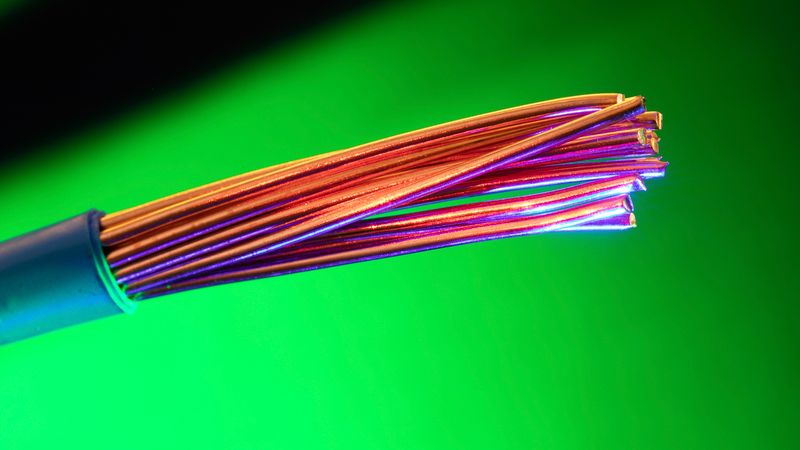
Wiring a NEMA 14-50 outlet typically requires 6 AWG copper wire for proper heat dissipation over long continuous loads. Specifically, most installations use 6/3 NM-B wire (which includes three 6-gauge copper conductors and a bare ground wire) if running through interior walls. Do not use aluminum wire for an EV outlet. Aluminum expands and contracts more than copper, increasing the risk of loose connections over time.
How do you install a NEMA 14-50 outlet for EV charging?
The installation involves running a dedicated line from your main electrical panel to the desired charging location.
First, the electrician installs a 50-amp dual-pole breaker in the panel. They route the 6 AWG copper wiring through the walls or in protective conduit to the garage or driveway. At the mounting point, they install a deep electrical box. Stiff 6 AWG wiring is incredibly difficult to bend and fit into standard single-gang or double-gang electrical boxes, so a deep junction box is necessary.
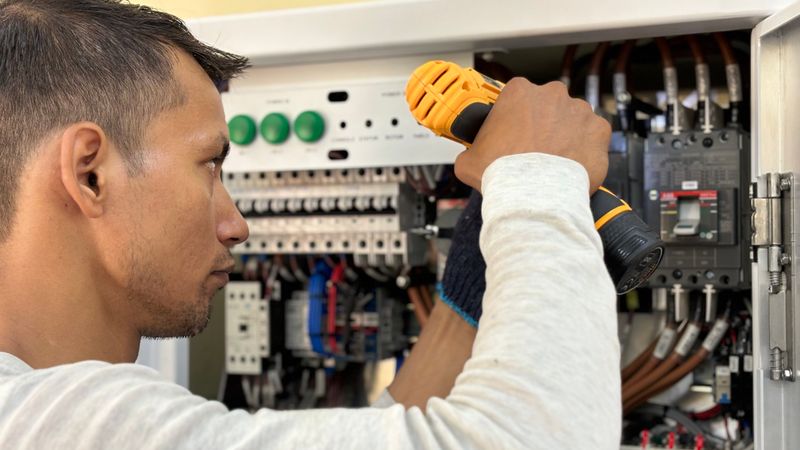
Finally, the wire ends are stripped, inserted into the industrial-grade NEMA 14-50 receptacle, and clamped down tightly using a calibrated torque screwdriver.
Can I install a NEMA 14-50 outlet for EV charging outdoors?
Yes, you can safely install this outlet on an exterior wall or a standalone pedestal. However, outdoor installations require specific weatherproof equipment.
You must house the receptacle inside a weatherproof enclosure. Furthermore, it requires an “in-use” cover. This is a large, deep plastic dome that closes securely over the outlet even while the thick EV charger cord is plugged in. This protects the live electrical contacts from rain, snow, and lawn sprinklers while the car is charging.
Does a NEMA 14-50 outlet require a GFCI breaker for an EV charger?
This is where many homeowners run into trouble. NEC 2020 mandates GFCI (Ground Fault Circuit Interrupter) protection for all 250-volt receptacles installed in garages and outdoor locations. This means the 50-amp breaker in your panel must be a GFCI breaker.
The problem is that a quality portable EV charger (known technically as an EVSE) already has its own internal GFCI protection built into the control box on the cord. When you plug a device with a built-in GFCI into a circuit that also has a GFCI breaker, the two systems interfere with each other.
This clash causes frequent nuisance tripping. You might wake up in the morning to find your car did not charge because the breaker tripped in the middle of the night. Check with your local building inspector. Some local jurisdictions have amended this rule specifically for EV charging, but in areas strictly following NEC 2020, a GFCI breaker is legally required for the outlet.
Is it better to use a NEMA 14-50 outlet or hardwire my EV charger?
Choosing between a plug-in setup and a hardwired setup dictates the total cost and reliability of your charging station.
A plug-in setup offers flexibility. If the charger breaks, you unplug it and buy a new one. You can take the charger to a second home or an RV park. However, hardwiring directly into the electrical panel solves the GFCI dilemma entirely. Under the NEC, hardwired EV chargers do not require a GFCI breaker because the charger’s internal safety systems provide all the necessary protection.
| Cost Component | NEMA 14-50 Outlet Setup | Hardwired Setup |
|---|---|---|
| Circuit Breaker | $100 – $150 (GFCI required) | $20 – $30 (Standard breaker) |
| Receptacle Cost | $50 – $90 (Industrial grade) | $0 (None needed) |
| Installation Labor | Higher (fitting stiff wires into boxes) | Lower (direct connection to unit) |
| Max Charging Speed | 40 Amps (9.6 kW) | Up to 48 Amps (11.5 kW) |
- If you plan to charge an EV at home and an RV on the weekends, choose the NEMA 14-50 outlet.
- If you live in a jurisdiction enforcing NEC 2020 rules and want zero nuisance tripping, choose a hardwired installation.
Safety checklist for existing NEMA 14-50 outlets
If you move into a home that already has a NEMA 14-50 outlet in the garage, do not assume it is safe for an EV. Previous owners likely used it for a welder or an intermittent load. Use this checklist before plugging in your car:
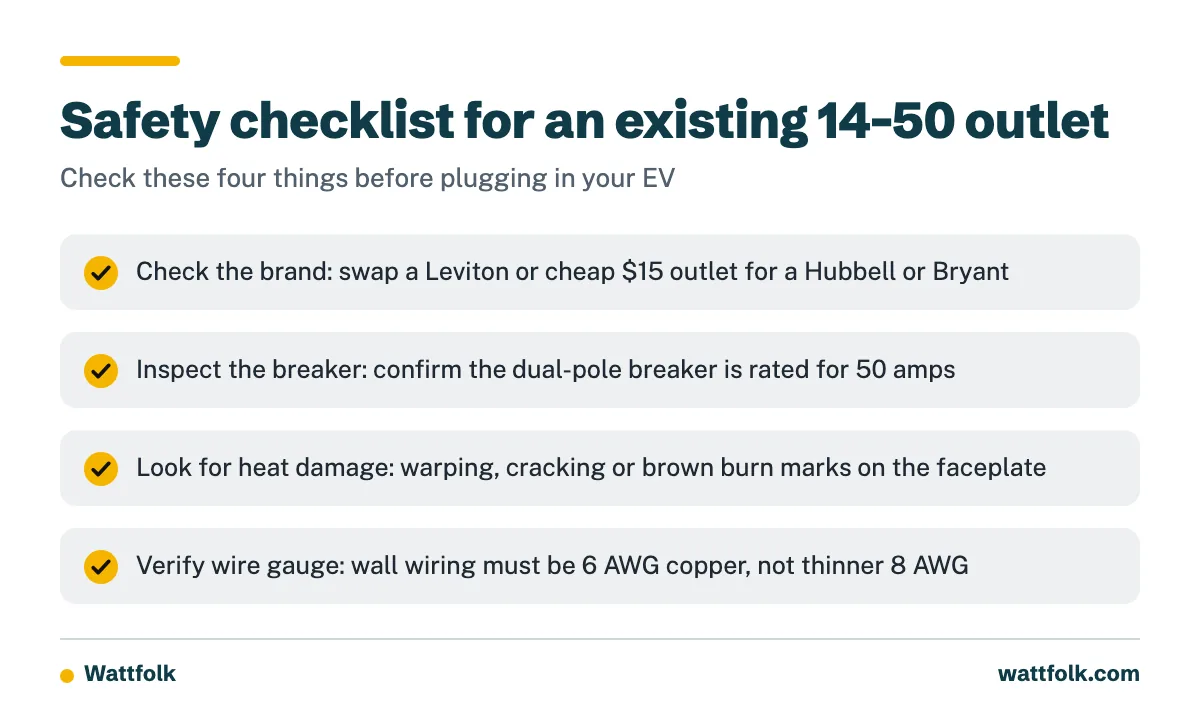
- Check the brand: Look at the face of the outlet. If it says Leviton or looks like a cheap $15 part, have an electrician swap it for a Hubbell or Bryant receptacle.
- Inspect the breaker: Locate the dual-pole breaker in your panel. Confirm it is rated for 50 amps.
- Look for heat damage: Inspect the plastic faceplate for warping, cracking, or brown burn marks.
- Verify wire gauge: Have a professional ensure the wall wiring is 6 AWG copper. If the previous owner used thinner 8 AWG wire, you cannot safely charge at 40 amps.
What do owners say?
Owners like
- The convenience of being able to unplug the charger and take it on road trips or to a second home.
- Easier and cheaper to swap out a defective EV charger without needing to call an electrician.
- Versatility of having an outlet that can also be used to power an RV or heavy shop tools.
Common complaints
- Standard hardware store outlets melting or burning out after just a few months of daily EV charging.
- Frustrating nuisance tripping because the electrical panel’s GFCI breaker clashes with the EV charger’s built-in GFCI.
- Stiff 6 AWG wiring is incredibly difficult to bend and fit into standard single-gang or double-gang electrical boxes.
Summarised from owner reviews and long-term user reports; individual experiences vary.
Frequently Asked Questions
nema 14 50 outlet ev charging?
A NEMA 14-50 outlet is a 240-volt, 50-amp receptacle used to deliver Level 2 charging speeds to electric vehicles. When paired with a 50-amp circuit, it provides a continuous 40 amps of power, adding roughly 25 to 35 miles of range per hour.
how to install nema 14 50 outlet for ev charging?
Installing this outlet requires running 6 AWG copper wire from a 50-amp dual-pole breaker in your main panel to a deep junction box at your charging location. Because of the high voltage and risk of continuous load fires, you should hire a licensed electrician to perform the installation and torque the connections to the correct specifications.
nema 14 50 outlet for ev charging outdoor?
You can install a NEMA 14-50 outlet outdoors, but it must be enclosed in a weatherproof box equipped with an in-use cover. This deep cover ensures the electrical contacts remain completely protected from rain and moisture even while the heavy EV charging cable is plugged in.
nema 14 50 outlet for ev charging lowes?
Most NEMA 14-50 outlets found on the shelves at Lowe’s or Home Depot are standard residential-grade parts designed for electric ovens. They are not built for continuous EV charging and can melt. You should special order an industrial-grade outlet, such as a Hubbell or Bryant, if you are sourcing parts for an EV charger.