
Most electric vehicle owners choosing an extension cord grab a standard indoor cable, while safety requires a heavy-duty 10- or 12-gauge cord. While most EV manufacturers strongly advise against it due to fire risks and voltage drop, you can use an extension cord for Level 1 charging in a pinch if it is sized correctly. You should never use a standard 16-gauge household extension cord, as the continuous power draw of an EV will quickly cause it to melt or catch fire.
Quick answer
Car manufacturers warn against using extension cords, but a heavy-duty 10-gauge or 12-gauge cord can safely handle Level 1 charging in emergencies. Standard 16-gauge household cords cannot handle the heat and are a severe fire hazard.
- Best for Level 1 charging: A 10-gauge (10 AWG) outdoor-rated extension cord kept under 50 feet.
- Best for Level 2 charging: A J1772 extension cable, which extends the car side rather than the high-voltage wall plug.
- EV charging is a continuous load, meaning it draws maximum current for over 3 hours.
- A standard 12-amp Level 1 charger requires an extension cord rated for at least 15 amps.
- Smart EVs detect voltage drops across cheap cords and will automatically abort the charge.
- Standard 16-gauge household cords will melt under the continuous heat of EV charging.
- J1772 extension cables are much safer than extending a 240V NEMA wall plug.
- Why do car manufacturers explicitly say not to use extension cords?
- Can you use an extension cord with my EV charger?
- What gauge extension cord do I need for an EV?
- What happens if the extension cord is too long or too thin?
- Safety Checklist: The 5-Point Plug and Touch Test
- Can I use an extension cord for a Level 2 (240V) charger?
- What is the difference between a NEMA extension cord and a J1772 extension cable?
- What do owners say?
- Frequently Asked Questions
Why do car manufacturers explicitly say not to use extension cords?
Car manufacturers design their portable chargers to plug directly into a wall outlet. This setup allows the temperature sensor built into the charger’s plug to monitor the wall socket. If the socket gets too hot, the charger automatically cuts the power.
When you add an extension cord, you separate the charger’s temperature sensor from the wall outlet. The charger can no longer tell if the wall socket is overheating. Because EV manufacturers cannot control the quality of the extension cord you use, they issue blanket bans on them to avoid liability and prevent fires.
Tesla is very clear about this rule. The official Tesla Mobile Connector manual explicitly states: “Do not use an extension cord, a multi-outlet adapter, a multi-plug, a conversion plug, or a power strip.” Despite these warnings, many owners find themselves in situations where reaching an outlet requires extra length.
Can you use an extension cord with my EV charger?
You can use an extension cord for a Level 1 (120V) EV charger if you strictly follow the continuous load rule. EV charging is not like running a toaster or a vacuum cleaner for five minutes. It is classified as a continuous load.
A standard Level 1 EV charger draws 12 amps. Applying the 125% rule, 12 amps multiplied by 1.25 equals 15 amps. This means any extension cord you use must be rated for at least 15 amps. Standard indoor household extension cords are typically 16-gauge wire and are completely unsafe for this task. They cannot handle the heat generated by a continuous 12-amp draw over ten or twelve hours.
What gauge extension cord do I need for an EV?
Wire thickness is measured in American Wire Gauge (AWG). The lower the number, the thicker the wire. Thicker wires carry more electricity with less resistance and less heat.
| Wire Gauge (AWG) | Safe for EV Charging? | Amperage Limit | Best Use Case |
|---|---|---|---|
| 16 Gauge | No (Fire Hazard) | 10-13 Amps | Lamps, holiday lights |
| 14 Gauge | Not Recommended | 15 Amps | Power tools, short runs |
| 12 Gauge | Yes (Short runs) | 20 Amps | Level 1 charging under 25 feet |
| 10 Gauge | Yes (Highly Recommended) | 30 Amps | Level 1 charging up to 50 feet |
For a 50-foot Level 1 charging run, a 10-gauge (10 AWG) extension cord is recommended to minimize voltage drop and heat generation. Heavy-duty cords cost more, but they are the only safe way to bridge the gap between a standard 120V wall outlet and your car.

What happens if the extension cord is too long or too thin?
Electricity faces resistance as it travels through a wire. This resistance causes a drop in voltage. If you use a thin 16-gauge cord, or stretch a cord out to 100 feet, the voltage arriving at your car will be noticeably lower than the voltage at the wall outlet.
Modern electric vehicles monitor incoming electricity very closely. Excessive voltage drop over a long, undersized cord can cause the EV’s onboard charger to detect a fault and automatically abort the charging session. Sometimes, the car software detects the voltage drop and lowers the charging speed to 8 amps automatically, leaving your battery empty the next morning.
Heat is the other major danger. Thin wires generate heat when forced to carry heavy loads. This heat travels to the weakest points: the plug connections. The actual plug prongs and receptacles will start melting before the cable itself catches fire.
From the Shop
We regularly see portable chargers with melted prongs. The damage usually happens because a heavy-duty cord was plugged into a worn-out, 20-year-old garage wall outlet. The extension cord was thick enough, but the loose metal contacts inside the old wall receptacle created high resistance. Always ensure the plug fits tightly into the wall socket. If a wall outlet feels loose, have a licensed electrician replace it.
Safety Checklist: The 5-Point Plug and Touch Test
If you must use a heavy-duty extension cord for Level 1 charging, use this process during the first charge.
- Uncoil completely: Never leave the extension cord coiled up. Coiled wires act like an inductor, trapping heat and creating a severe fire hazard.
- The 15-minute touch test: After 15 minutes of charging, touch the wall plug and the connection between the extension cord and the EV charger. They should be warm, but never too hot to hold.
- The 1-hour touch test: Check the connections again after one hour. This is when a continuous load starts to saturate the materials with heat.
- Weatherproofing: Keep the connection block off the ground and away from puddles. Use an outdoor weather-resistant cord cover for the connection point.
- GFCI protection: Ensure the wall outlet is protected by a Ground Fault Circuit Interrupter (GFCI). This will cut power instantly if water enters the connection.
Can I use an extension cord for a Level 2 (240V) charger?
Extending a 240V NEMA wall outlet (like a NEMA 14-50 plug) is highly discouraged. A Level 2 charger draws far more power, typically between 32 and 40 amps. Passing this amount of power through an extra set of high-voltage plug connections introduces massive heat risks.
If you absolutely need to extend the reach of a Level 2 charger, you should extend the low-voltage side of the equipment, not the high-voltage wall side.
What is the difference between a NEMA extension cord and a J1772 extension cable?
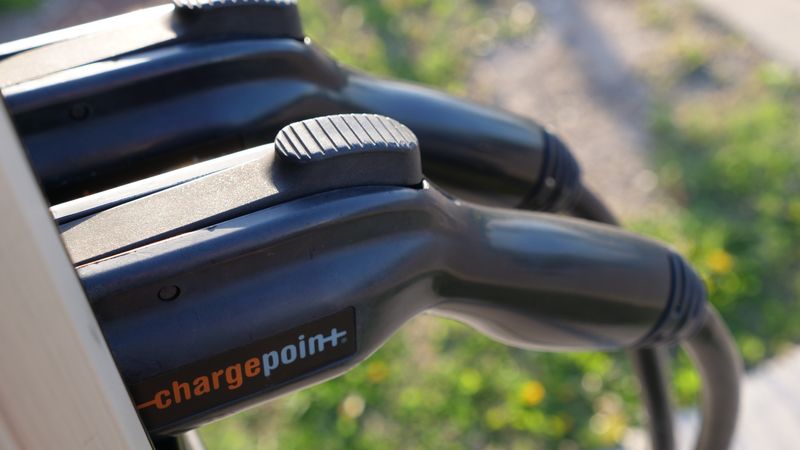
A NEMA extension cord plugs into your wall outlet and moves high-voltage electricity further away from the wall. A J1772 extension cable plugs into the handle of your existing EV charger, extending the reach from the charger box to the car port.
| Feature | NEMA Wall Extension | J1772 Extension Cable |
|---|---|---|
| Connection Point | High-voltage wall outlet | Low-voltage vehicle port |
| Safety Protocols | None (Dumb wire) | Retains EVSE-to-car communication |
| Weather Resistance | Poor (wall plugs are not waterproof) | Excellent (J1772 handles are sealed) |
| Overall Safety | High risk of melting at the wall | Inherently safer design |
J1772 extension cables retain the safety communication protocols between the EVSE (charger) and the car, making them inherently safer than extending the wall outlet side. If something goes wrong, the charger can instantly cut the power. If you use a NEMA extension cord, the charger has no way to monitor the extra connection at the wall.
What do owners say?
Owners like
- Heavy-duty 10-gauge cords are a lifesaver when visiting relatives without a driveway charger.
- Properly sized 10 AWG cords don’t get warm at all, even after 12 hours of Level 1 charging.
- J1772 extension cables are much easier to manage and feel much safer than thick 240V NEMA wall extensions.
Common complaints
- The plug connections often get extremely hot, sometimes melting the plastic housing if the receptacle is old.
- Heavy-duty 10-gauge or 8-gauge cords are incredibly stiff and hard to coil, especially in cold winter weather.
- Car software frequently detects voltage drops on cords over 50 feet and lowers the charging speed to 8 amps automatically.
- Tripping the garage or exterior GFCI breaker is a common nuisance when introducing an extension cord in wet weather.
Summarised from owner reviews and long-term user reports; individual experiences vary.
Frequently Asked Questions
can you use extension cord for ev charging?
Yes, but only for Level 1 (120V) charging and only if you use a heavy-duty 10- or 12-gauge cord. Most manufacturers officially advise against it due to fire risks, but a properly sized cord handles the load safely in temporary situations.
can i use an extension cord with my ev charger?
You can use a high-quality, outdoor-rated 10-gauge extension cord with a Level 1 EV charger. You must never use a standard indoor 16-gauge cord because EV charging is a continuous load that will quickly melt thin wires.
can i use an extension cord for my ev?
You can use one in a pinch, provided it is thick enough (10 AWG is recommended for a 50-foot run). Ensure the wall outlet is in good condition, as worn-out outlets provide loose connections that cause heat buildup and melting.
can you use extension cord with ev charger?
Yes, for 120V chargers, a thick 10-gauge cord works safely. For 240V Level 2 chargers, extending the wall plug is highly dangerous. You should use a J1772 extension cable instead, which extends the connection between the charger box and the car.
can i use an extension cord with my phone charger?
Yes. Phone chargers draw very little power compared to an electric vehicle. Any standard household extension cord can safely handle the low electrical demand of a phone charger.
can you use an extension cord with a tesla charger?
Tesla’s Mobile Connector manual specifically warns against using extension cords. However, if you are stuck without an alternative, a heavy-duty 10-gauge cord will physically work for 120V charging. Tesla vehicles monitor voltage drops carefully and will reduce charging speeds if they detect resistance in a thin or excessively long cord.
can you use an extension cord with a car charger?
Yes, as long as the cord is rated for at least 15 amps to handle a continuous 12-amp draw. Using a 10-gauge (10 AWG) cord minimizes the risk of voltage drop, overheating, and electrical fires.