
On average, charging an electric vehicle at home costs about half as much per mile as fueling a comparable gas-powered car. However, relying entirely on public DC fast chargers can cost just as much, and sometimes more, than traditional gasoline. Your actual savings depend heavily on your local residential electricity rates, your vehicle’s efficiency, and where you plug in.
Quick answer
Home charging averages 4 to 5.3 cents per mile, making it roughly 60% cheaper than driving a typical 25-mpg gas car. Public fast charging frequently eliminates this price gap completely, costing up to three times as much as home electricity.
- Best for daily commuters: Dedicated Level 2 home charging on off-peak utility rates.
- Best for road trips: Public DC fast charging networks, accepting the higher convenience cost.
- The US national average residential electricity rate is roughly 16 to 17 cents per kilowatt-hour (kWh).
- Charging an EV with a 60 kWh battery from 10% to 80% at home usually costs between $7 and $10.
- The exact same 10% to 80% charge at a public fast charger generally costs between $15 and $30.
- A typical 25 mpg gas car with fuel at $3.50 per gallon costs about 14 cents per mile to drive.
- Gas stations do not offer free charging; they partner with paid networks that charge a premium.
- How much does it cost to charge electric car vs gas?
- What is the average cost per mile for an EV compared to a gas car?
- How do I calculate the charging cost per mile using my electric bill?
- How much does it cost to charge electric car at gas station?
- Why is public fast charging more expensive than home charging?
- Does charging an EV during the day cost more than at night?
- What do owners say?
- Frequently Asked Questions
How much does it cost to charge electric car vs gas?
Comparing these two power sources requires looking at the cost per kilowatt-hour (kWh) versus the cost per gallon. Electricity and gasoline use entirely different metrics. To find the real difference, you have to look at the energy required to travel a set distance.
The US national average residential electricity rate hovers around 16 to 17 cents per kWh. An average electric vehicle travels roughly 3 to 4 miles per 1 kWh of electricity. By comparison, gasoline prices frequently sit around $3.50 per gallon, with an average non-hybrid crossover getting about 25 miles per gallon (mpg).
When you charge at home, the EV wins easily. Below is a side-by-side calculation for driving 100 miles. This assumes 16 cents per kWh, a 10% energy loss during charging, $3.50 per gallon for gas, and average vehicle efficiencies.
| Metric (Per 100 Miles) | Electric Car (Home Charge) | Gas Car |
|---|---|---|
| Efficiency | 3.5 miles per kWh | 25 miles per gallon |
| Energy Needed | 28.5 kWh (+10% loss = 31.4 kWh) | 4 gallons |
| Unit Cost | $0.16 per kWh | $3.50 per gallon |
| Total Cost | $5.02 | $14.00 |
What is the average cost per mile for an EV compared to a gas car?
At 16 cents per kWh, driving an average EV costs approximately 4 to 5.3 cents per mile when charged at home. A typical 25 mpg gas car with fuel at $3.50 per gallon costs about 14 cents per mile to drive. Over the course of a year, this difference adds up rapidly.
Let us look at a real-world comparison over 10,000 miles between two highly popular vehicles in the same size class: a Tesla Model Y and a Toyota RAV4.
- Tesla Model Y (Home Charging): Driving 10,000 miles requires roughly 3,142 kWh of grid electricity (accounting for charging losses). At $0.16 per kWh, the total fuel cost is $502.
- Toyota RAV4 (Gasoline): Driving 10,000 miles at 25 mpg requires 400 gallons of gas. At $3.50 per gallon, the total fuel cost is $1,400.
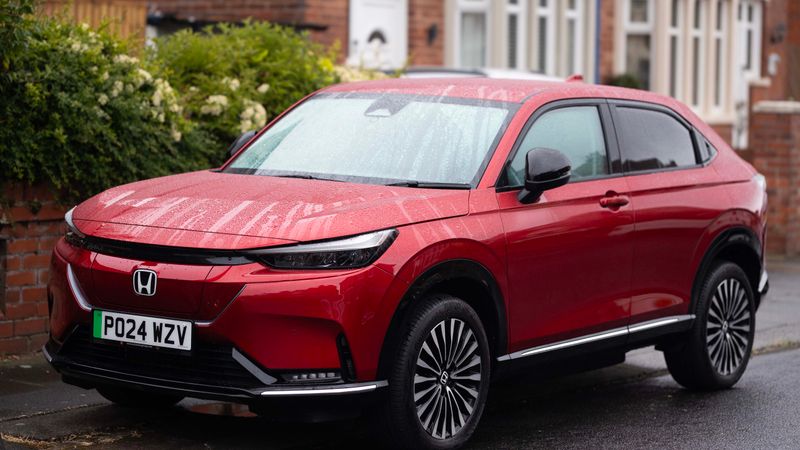
The visual breakdown below shows how public fast charging changes this dynamic.
1,000-Mile Cost Comparison Graph
Home EV ($50): [██████░░░░░░░░░░░░░░░░░░░░░░░░░░░░]
Gasoline ($140): [██████████████████░░░░░░░░░░░░░░░░]
Public EV ($180): [████████████████████████░░░░░░░░░░]
*Assumes $0.16/kWh home, $3.50/gal gas, and $0.55/kWh public charging.
How do I calculate the charging cost per mile using my electric bill?
Your actual savings depend entirely on the electricity rate printed on your monthly utility bill. State averages vary wildly, from 12 cents per kWh in parts of the Midwest to over 40 cents per kWh in Hawaii or California. To find your exact number, you need a basic formula.
One critical step most EV owners miss is accounting for charging losses. When AC power from your house converts to DC power for your car’s battery, heat is generated. This conversion process usually wastes about 10% of the electricity drawn from your meter. You pay for that lost power.
Fill-in-the-Blank Cost Calculator
Grab your latest electric bill and find your total price per kWh (including delivery fees).
1. Your Electricity Rate: $______ per kWh
2. Your EV Efficiency: ______ miles per kWh (Check your car’s dashboard screen)
Formula: (Line 1 ÷ Line 2) × 1.10 = $______ per mile
Example using national averages: ($0.16 ÷ 3.5) × 1.10 = $0.05 per mile.
How much does it cost to charge electric car at gas station?
Many major gas station chains now feature EV charging stalls in their parking lots, but they are not free. Gas stations generally partner with commercial charging networks, such as EVgo or Electrify America, to operate these units. You will pay the network’s premium public rate.
Do gas stations charge for charging electric cars? Yes, absolutely. Public DC Fast Charging rates typically range from 30 cents to over 60 cents per kWh. At these rates, the cost gap with gas shrinks significantly, and sometimes vanishes entirely.
Furthermore, pricing structures at these stations vary. Some bill you by the kWh (how much energy you take), while others bill you by the minute (how long you stay plugged in). If a gas station charger bills by the minute and your car charges slowly due to cold weather, your cost per mile will skyrocket.
Billing Structure Decision Guide
- If the charger bills per kWh: The price is predictable. Multiply the rate by your battery size to estimate the cost.
- If the charger bills per minute: Only use this if your EV has a high peak charging speed (150kW+) and your battery is warm. Otherwise, you will overpay.
- If you finish charging but stay parked: Unplug immediately. Most networks charge harsh “idle fees” (up to $1 per minute) if you occupy the space after your battery is full.
Why is public fast charging more expensive than home charging?
Charging an EV with a 60 kWh battery from 10% to 80% at home usually costs between $7 and $10, while the exact same charge at a public fast charger can cost $15 to $30. The difference comes down to infrastructure and utility demand charges.
When you plug into a Level 2 charger at home, you pull a steady, relatively low amount of power over several hours. When you plug into a DC Fast Charger on the highway, the dispenser blasts a massive amount of energy into the car in just 20 to 30 minutes. Utility companies charge commercial station operators massive “demand fees” for the ability to draw that much power instantly from the grid.
Because of this, you should view public fast charging the way you view buying food at an airport: you pay a steep premium for the convenience of location and speed. It is not designed to be your primary daily fuel source.
Does charging an EV during the day cost more than at night?
It often does, provided your home utility company offers Time-of-Use (TOU) rate plans. Many utility providers heavily discount electricity late at night when general grid demand drops.
For example, a utility company might charge 22 cents per kWh during peak afternoon hours, but only 9 cents per kWh between midnight and 6:00 AM. Modern EVs allow you to plug the car in when you get home at 5:00 PM, but delay pulling power until the cheap overnight window begins.
From the Shop
We routinely hear from new EV owners who see their first electric bill spike because they treated their car like a laptop. They plugged it in at 4:00 PM every day right during peak TOU hours. Once they spent five minutes in the car’s touchscreen menu to set a midnight charging schedule, their monthly fueling costs dropped by more than 40%. Always check if your provider offers an EV-specific rate plan.
Another factor that impacts your real-world cost is weather. Over-generalizing EV efficiency is a common mistake. Cold winter weather drops battery range significantly because the car must use energy to heat the cabin and warm the battery cells. If your car’s efficiency drops from 3.5 miles per kWh in summer to 2.5 miles per kWh in winter, your cost per mile temporarily goes up, even if your electricity rate stays exactly the same.
What do owners say?
Owners like
- The massive drop in monthly commuter costs when charging at home overnight
- The convenience of waking up to a ‘full tank’ without needing to stop during morning commutes
- Utility company EV-specific rate plans that make overnight charging incredibly cheap
Common complaints
- Public fast charging on road trips is surprisingly expensive and sometimes costs more than gas
- Confusing pricing structures at public chargers (per minute vs. per kWh) making it hard to predict the bill
- Hidden parking fees or idle fees at some public charging stations
Summarised from owner reviews and long-term user reports; individual experiences vary.
Frequently Asked Questions
how much does it cost to charge electric car vs gas?
When charging at home, an electric car typically costs about half as much to drive per mile compared to a gas car. At the national average rate of 16 cents per kWh, driving an EV costs around 4 to 5 cents per mile. A 25 mpg gas car at $3.50 per gallon costs roughly 14 cents per mile.
how much does it cost to charge electric car at gas station?
Gas stations use commercial public charging networks. Rates normally fall between 30 and 60 cents per kWh. Taking a 60 kWh battery from 10% to 80% at a gas station charger will usually cost between $15 and $30, depending on the network and state.
do gas stations charge for charging electric cars?
Yes. Gas stations partner with private networks like EVgo or Electrify America to host chargers. You must pay through an app or credit card reader to start a session. They are virtually never free.
cost to charge electric vehicle vs gas?
Home electricity offers massive savings, reducing fuel costs by up to 60%. However, relying entirely on highway fast chargers can make an electric vehicle just as expensive to drive as a traditional gas-powered car.