
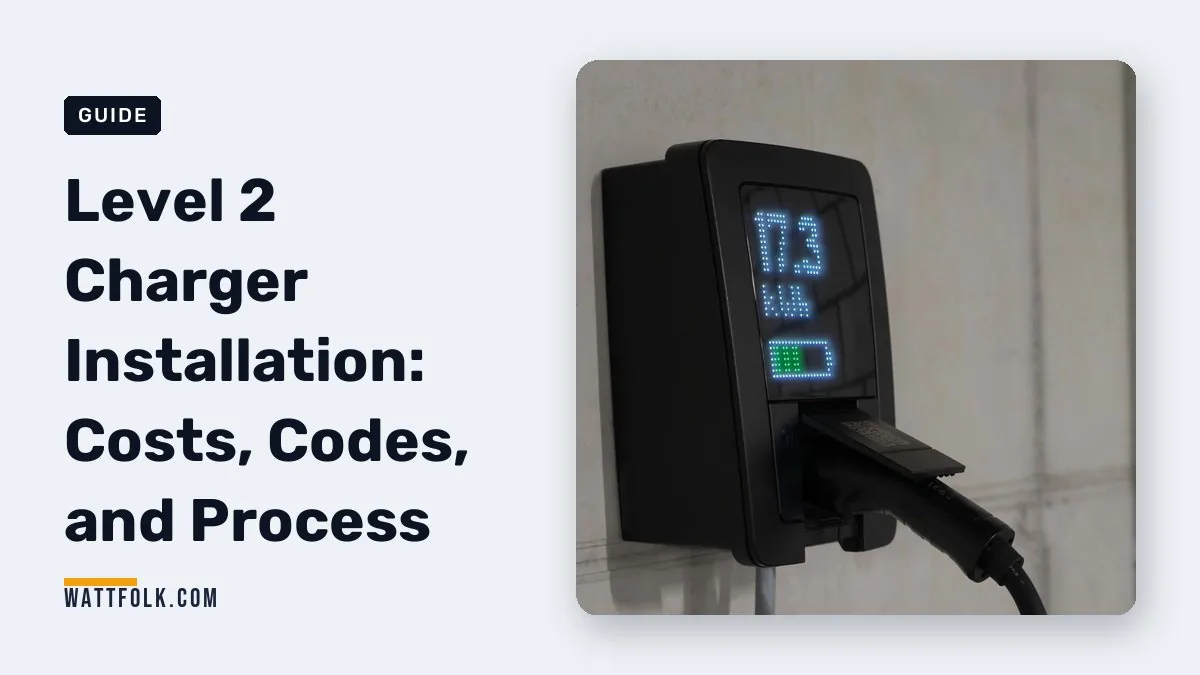
New electric vehicle owners quickly learn that a standard wall outlet charges too slowly for daily driving. A typical residential Level 2 charger installation costs between $800 and $2,000, including the charger unit and electrician labor. Costs can rise significantly if your home requires an electrical panel upgrade or a long conduit run to the garage.
Quick answer
Expect to pay $800 to $2,000 for a complete Level 2 installation. Hardwiring the unit is the safest method and allows for maximum charging speed, while smart load management devices can help you avoid expensive panel upgrades.
- Best for standard installations: A 48-amp hardwired charger, maximizing overnight charging speed while meeting all safety codes.
- Best for older homes: A 16-amp or 32-amp hardwired unit, which adds sufficient daily range without overloading a limited electrical panel.
- Level 2 chargers operate on 208-240V AC power and add 12 to 40 miles of range per hour.
- Hardwiring is mandatory under the National Electrical Code for chargers drawing more than 40 amps.
- Load management devices (like a DCC-9) can save thousands of dollars by preventing the need for a full panel upgrade.
- Eligible US taxpayers can claim a 30% tax credit (up to $1,000) for charging hardware and installation.
- How much does level 2 charger installation cost?
- Do I need to upgrade my electrical panel for a level 2 charger?
- Is it better to hardwire a charger or use a plug?
- Level 2 charger vs 240v outlet: which should I choose?
- Level 2 charger vs supercharger: what is the difference?
- How do I find level 2 charger installation near me?
- Can I install a level 2 EV charger myself?
- What do owners say?
- Frequently Asked Questions
How much does level 2 charger installation cost?
A complete Level 2 charger installation costs between $800 and $2,000 for most residential properties. This total price covers two separate expenses: the electric vehicle supply equipment (EVSE) hardware and the electrician’s labor.
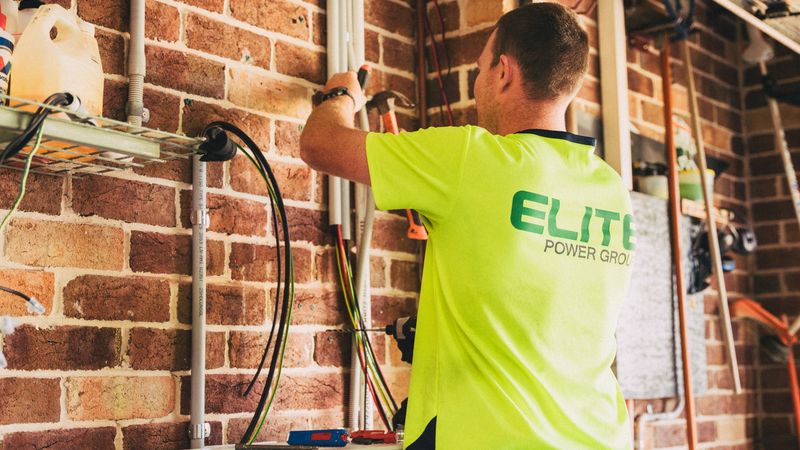
The charger hardware usually costs between $400 and $700. The remaining balance goes toward copper wire, conduit, circuit breakers, permits, and professional labor. Distance is the biggest factor in your final quote. Heavy-gauge copper wire is expensive. If your main electrical panel sits directly on the other side of your garage wall, the wire run is short and cheap. If your panel is in a finished basement on the opposite side of the house, the electrician must run fifty feet of conduit through walls and joists, driving labor and material costs higher.
| Expense Category | Simple Installation (Panel in Garage) | Complex Installation (Panel in Basement) |
|---|---|---|
| Level 2 Charger (EVSE) | $400 – $700 | $400 – $700 |
| Labor & Materials | $300 – $600 | $1,000 – $2,500+ |
| Permits & Inspections | $50 – $150 | $100 – $300 |
| Estimated Total | $750 – $1,450 | $1,500 – $3,500+ |
You can offset some of these expenses. Under the US Alternative Fuel Vehicle Refueling Property Credit (30C), eligible taxpayers can receive a tax credit for 30% of the hardware and installation costs, up to $1,000. Many local utility companies also offer cash rebates if you agree to charge during off-peak hours.
Do I need to upgrade my electrical panel for a level 2 charger?
Many older homes have 100-amp electrical panels that cannot support a new heavy appliance. If you add a 48-amp EV charger to a house that already runs an electric stove, an electric dryer, and central air conditioning, you will likely overload the system. In the past, the only solution was a heavy-up, or a full panel upgrade to 200 amps, which costs between $2,000 and $4,000.
The National Electrical Code (NEC) states that EV chargers are a continuous load. They pull high power for over three hours at a time. The code requires the circuit breaker to be sized 25% larger than the charger’s maximum output. A 48-amp charger needs a 60-amp breaker. A 40-amp charger needs a 50-amp breaker. This large breaker size is what often triggers the need for a panel upgrade.
Is it better to hardwire a charger or use a plug?
Electricians overwhelmingly recommend hardwiring a Level 2 charger. Hardwiring means the heavy-gauge copper wires connect directly into the terminals inside the charger box, with no physical plug in the middle.
Hardwiring allows for faster charging speeds. The NEC makes hardwiring mandatory for any residential EV charger drawing more than 40 amps. If you want a 48-amp charger to maximize your charging speed, a plug is against code.
Decision Matrix: Hardwired vs Plug-in
- If you want maximum charging speed (48 amps or higher): You must hardwire. Plugs are prohibited by code for loads above 40 amps.
- If you are installing the charger outdoors: Choose hardwired. Plugs and outlets are vulnerable to rain, snow, and unauthorized tampering.
- If you rent your home or plan to move soon: A plug-in setup makes sense. You can easily unplug the expensive charger unit and take it to your next property.
Level 2 charger vs 240v outlet: which should I choose?
Many homeowners assume they can just have an electrician install a 240V NEMA 14-50 outlet and plug in a cheap charger cable. While this works, it introduces two major safety and reliability issues.
First, the NEC requires all new 240V garage outlets used for EV charging to be installed on a GFCI (Ground Fault Circuit Interrupter) breaker. Plug-in EV chargers also contain their own internal ground fault protection. When the two systems interact, they often cause nuisance tripping. The breaker trips randomly in the middle of the night, and you wake up to a car with an empty battery.
Second, the quality of the outlet matters. Cheap residential 240V outlets are dangerous for continuous loads.
From the Shop
Based on what we see on the bench, standard $15 residential NEMA 14-50 receptacles are a common failure point. These cheap outlets were designed for electric ranges, which cycle their heat on and off. EV chargers pull maximum power for eight hours straight. Over time, the internal metal contacts heat up, expand, loosen, and eventually melt the plastic housing. If you must use an outlet, specify that the electrician install an industrial-grade EV receptacle, which costs closer to $80 but handles continuous heat safely.
Level 2 charger vs supercharger: what is the difference?
A Level 2 charger operates on 208-240V alternating current (AC) power. It feeds this AC power to your vehicle, and the car’s onboard computer converts it to the direct current (DC) needed by the battery. Level 2 hardware typically adds 12 to 40 miles of range per hour, depending on the amperage.
A Supercharger (or DC Fast Charger) bypasses the car’s internal converter and pushes massive amounts of 480V+ direct current straight into the battery. It can fill a car in 20 minutes. Based on the specifications required, most residential homes cannot install Superchargers. They require commercial three-phase electrical infrastructure that costs tens of thousands of dollars to bring to a residential property.
How do I find level 2 charger installation near me?
To find a qualified installer, search for licensed, bonded, and insured electricians in your area who have specific experience with EVSE equipment. Do not hire general handymen for 240V electrical work.
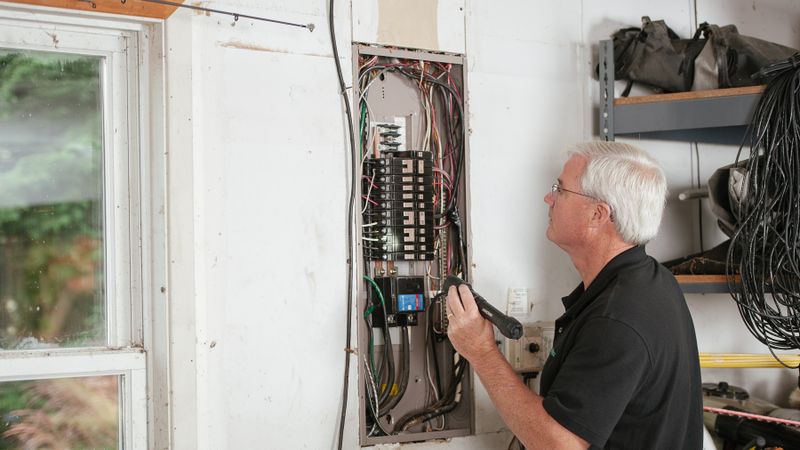
Before you call for quotes, gather basic information about your home so the electrician can provide an accurate estimate. Check your main electrical panel to see the main breaker size (usually 100A, 150A, or 200A). Measure the rough distance in feet from the panel to the spot where you want the car to charge. Finally, check if your utility provider has a list of approved contractors; using their network often unlocks specific rebates.
Can I install a level 2 EV charger myself?
No. While mounting the plastic charger box to the wall with a few screws is simple, the electrical wiring is not a safe project for beginners. Wiring a 60-amp continuous load requires specific torque settings on the terminal lugs, correct wire gauge selection, and proper conduit bending. A loose neutral wire or an incorrectly torqued lug will arc, generate extreme heat, and start a fire.
What do owners say?
Owners like
- The massive convenience of waking up to a 100% full battery every morning.
- Peace of mind and reliability from a hardwired connection compared to a plug-in unit.
- Utility cost savings from smart chargers that schedule charging during overnight off-peak rates.
- 25-foot cables that make it easy to charge regardless of how the car is parked.
Common complaints
- Sticker shock at electrician quotes, especially when the main panel is far from the driveway.
- Nuisance tripping of GFCI breakers when using a plug-in Level 2 charger on a 240V outlet.
- Smart chargers losing Wi-Fi connection in detached garages, disabling smart features.
- Thick, high-amperage charging cables becoming incredibly stiff and hard to maneuver in freezing winter weather.
- Standard residential NEMA 14-50 outlets melting or degrading over time due to the continuous heavy load.
Summarised from owner reviews and long-term user reports; individual experiences vary.
Frequently Asked Questions
How much is level 2 charger installation?
A typical residential installation costs between $800 and $2,000 in total. This includes buying the charger hardware ($400 to $700) and paying a licensed electrician to run the wiring and secure the necessary permits.
Level 2 charger installation cost: what causes the price to go up?
The distance from your electrical panel to your parking spot is the biggest factor. Long distances require more expensive heavy-gauge copper wire and extra labor hours. Upgrading an old 100-amp electrical panel to a modern 200-amp service will also add $2,000 to $4,000 to the total job.
How do I arrange a level 2 charger installation near me?
Start by checking your local electric utility company’s website. They frequently list approved and licensed electricians in your area. Using these specific contractors often qualifies you for utility rebates that offset the installation cost.
What is included in a level 2 charger installation?
A complete job includes assessing the current electrical panel capacity, pulling local permits, running heavy-gauge wire through protective conduit, installing the correct breaker, mounting and hardwiring the charger unit, and performing a final load test to ensure safe operation.
How much does level 2 charger installation cost if I only need an outlet?
If you already have a charger cable and only need an electrician to install a 240V NEMA 14-50 outlet next to your electrical panel, you can expect to pay $300 to $600 for labor, wire, an industrial-grade receptacle, and a GFCI breaker.
Level 2 charger vs 240v outlet: which is better?
Hardwiring a Level 2 charger is better and safer. Standard 240V outlets can wear out or melt under the constant electrical load required by an EV. Plug-in models also frequently trigger nuisance trips on modern GFCI circuit breakers, leaving your car uncharged.
Level 2 charger vs supercharger: what is the difference?
Level 2 chargers use 240V AC power and can be installed in residential homes, adding 12 to 40 miles of range per hour. Superchargers use 480V+ DC power and are strictly commercial units, capable of filling an EV battery in under 30 minutes. You cannot install a Supercharger at a typical home.