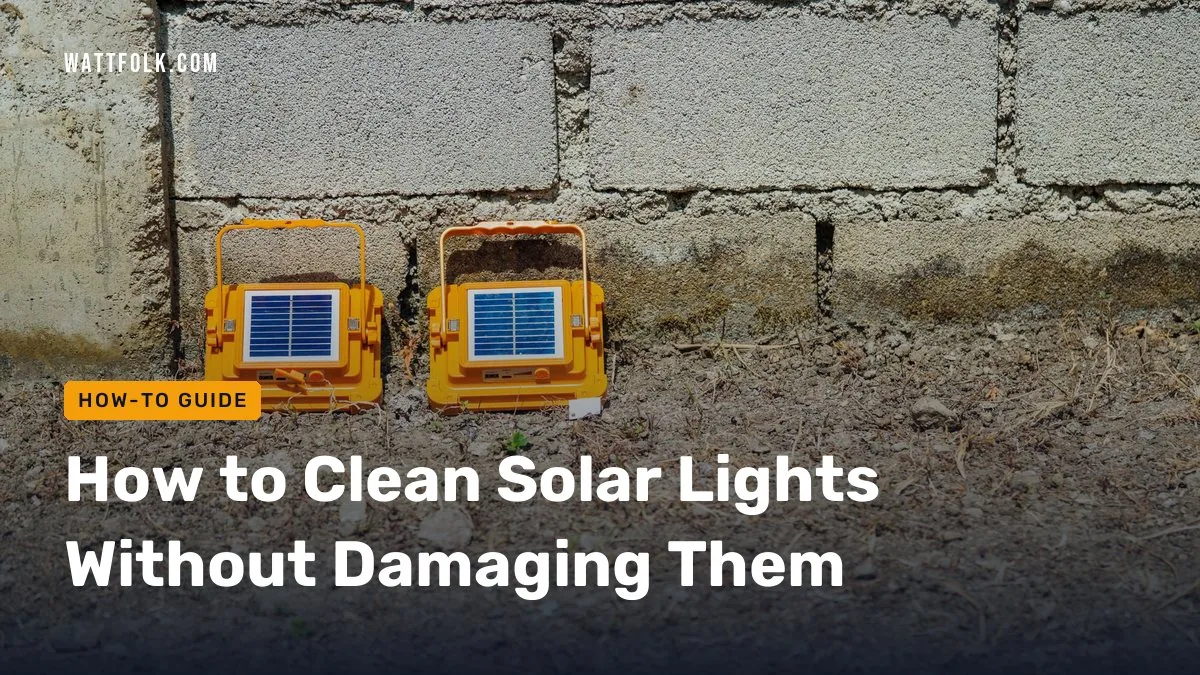
Most dirty solar lights need nothing more than warm water, a few drops of mild dish soap, and a soft microfiber cloth. Switch the light off, let it cool, wipe the panel and housing, then dry it fully. Use white vinegar only for mineral spots and corroded battery contacts, and skip WD-40, nail-polish remover, and abrasive pads.
Quick answer
Turn the light off, remove the batteries if you can, and wipe the cool panel with a damp microfiber cloth and mild soapy water. Rinse with a clean damp cloth and dry completely. Save vinegar for mineral film and battery contacts.
- Best for routine dirt: warm soapy water, gentle and safe on seals
- Best for mineral spots: diluted white vinegar, then a water wipe
- Best for corroded contacts: vinegar on a cotton swab
- Clean the panel when it is cool, with the light switched off.
- Use a damp, wrung-out microfiber cloth so water stays out of seams and seals.
- Vinegar suits mineral deposits and battery contacts, but always wipe with clean water and dry.
- WD-40, acetone nail-polish remover, pressure washers, and scouring pads can harm plastic, coatings, and seals.
- If a clean light stays dim, check the batteries, shade, LED, and seals before blaming dirt.
- What should you do before cleaning solar lights?
- How do you clean solar lights step by step?
- What do you clean solar lights with?
- How do you clean solar lights that are cloudy?
- How do you clean solar lights with vinegar?
- Can you clean solar lights with alcohol?
- Can you clean solar lights with WD-40 or nail-polish remover?
- How do you clean the battery terminals in a solar light?
- What if cleaning does not make the light brighter?
- Maintenance schedule and checklist
- What do owners say?
- Frequently Asked Questions
What should you do before cleaning solar lights?
Switch the light off, remove the batteries if they are easy to reach, and wait until the panel is cool. Cleaning a hot panel with cold water can cause thermal stress and possible microcracks, according to BLUETTI’s solar panel maintenance guide. That warning is aimed mostly at larger glass modules, but early morning or evening is still the best time for small garden lights too.
Brush off loose leaves, spider webs, and grit first. Wiping grit around with a cloth is how panels get scratched.
How do you clean solar lights step by step?
Follow the same short routine for most lights. It takes about five minutes per light.
- Switch the light off and take out the batteries if the compartment opens easily.
- Dry-brush dust, leaves, and webs with a soft-bristle brush.
- Mix a few drops of mild dish soap into a bowl of warm water.
- Dip a microfiber cloth, then wring it out well. It should be damp, not dripping.
- Wipe the panel, lens, housing, and stake.
- Wipe again with a cloth dampened in plain water to remove soap film.
- Dry with a dry microfiber cloth, then let the light air-dry before closing it up.
Wringing the cloth matters. Water forced into seams and seals is a common way moisture gets inside, where it corrodes contacts later.

What do you clean solar lights with?
Use mild dish soap, warm water, and a soft microfiber cloth, sponge, or soft brush. Manufacturer and maintenance guidance, including Govee’s cleaning advice, points to gentle tools rather than abrasive ones. The same answer works for most outdoor lights. The table shows where other cleaners fit.
| Cleaner | Suitable use | Risk |
|---|---|---|
| Mild soapy water | Everyday dirt, bird droppings, pollen | Low, if cloth is wrung out |
| Diluted white vinegar | Mineral film, battery contact corrosion | Must be wiped off and dried; keep off seals longer than needed |
| 70% isopropyl alcohol | Possibly glass lenses, only if the maker allows it | Can cloud or dry some clear plastics |
| WD-40 | Not recommended | Lubricant, not a cleaner; attracts dust; may harm some plastics |
| Acetone nail-polish remover | Not recommended | Solvent can melt or craze plastic, coatings, and seals |
| Abrasive cleaners and pads | Not recommended | Scratch panels and lenses |
How do you clean solar lights that are cloudy?
First work out whether the haze is on the surface or in the plastic. Surface haze, such as mineral film or residue, wipes off with soapy water and a short vinegar treatment. Haze in the plastic itself usually will not.
Many guides suggest toothpaste or hard polishing. That can abrade the panel’s surface and make the cloudiness worse. And if UV exposure has degraded the plastic, no amount of rubbing will fix it.
A simple test: clean and dry the panel, then look at it from an angle. If the cloudiness stays and feels smooth, it is likely UV damage. If you feel a rough or chalky film, it is likely mineral buildup.
From the Shop
Worked example for a cloudy pathway light. Dry-brush the leaves and grit away. Wipe with soapy water and a wrung-out microfiber cloth. If a white film remains, press a cloth dampened with diluted white vinegar on the spot for a short time. Rinse with a plain-water cloth and dry fully. Then leave the light out in full sun and check it that evening. If it runs noticeably longer, dirt was the problem. If not, look at the batteries.
How do you clean solar lights with vinegar?
Apply white vinegar with a cotton swab or damp cloth to mineral deposits, then wipe with plain water and dry thoroughly. This approach is described in BLUETTI’s maintenance guide. Dilute it with some water for the panel and housing, and keep the contact time short.
Treat the panel and the battery contacts as two separate jobs. On the panel, you are removing hard-water spots. On the contacts, you are dissolving corrosion. Use a fresh swab for each, and never leave vinegar to dry on either.
Can you clean solar lights with alcohol?
Only with caution. Some guidance warns that alcohol and ammonia-based cleaners can cloud or dry clear plastic. Use alcohol only if the manufacturer permits it, and test a hidden spot first.
The material matters. A glass lens tolerates 70% isopropyl alcohol better than a clear plastic panel does. Most budget garden lights use plastic, so soapy water is the safer default.
- Surface dirt or droppings: soapy water and microfiber.
- White mineral film: brief diluted vinegar, then rinse and dry.
- Corroded terminals: vinegar on a cotton swab, then dry fully.
- Cloudy plastic that stays cloudy: likely UV damage; consider replacing.
- Dead after a full sunny day: test or replace the battery.
- Moisture inside the housing: dry it out; if it returns, the seal has failed.
Can you clean solar lights with WD-40 or nail-polish remover?
No to both. WD-40 is a lubricant, not a cleaner. Its residue can attract dust and may damage some low-quality plastics. A greasy panel collects dirt faster and charges worse.
Nail-polish remover is worse. Acetone-based products are strong solvents that can damage plastic, coatings, and seals. Pressure washers, harsh chemicals, and abrasive pads carry the same risk, as noted in this outdoor solar light cleaning guide.
How do you clean lenses, housings, and seams?
Wipe them with a damp cloth, never a soaked one. Use a cotton swab or soft brush for seams, decorative edges, and stake joints. Do not spray or hose the unit, and never submerge it unless the maker says it is safe. Fine cracks around seals are worth noting, because water can creep in through them.

How do you clean the battery terminals in a solar light?
Remove the batteries, dab a cotton swab dampened with white vinegar on the crusty contacts, and gently lift the residue. Wipe with a swab dampened in plain water, then let everything dry fully before reinstalling.
Do not scrape hard with metal tools. If the contacts are badly eaten away or the battery has leaked, replace the battery. Check that the new rechargeable cells match the type stated on the light.
What should you do if cleaning does not make the solar light brighter?
Check four things in this order: batteries, shade, LED, and water ingress. Replacing batteries often restores a light that cleaning cannot. Cheap units often lose battery capacity after a season or two.
- Battery: swap in fresh rechargeable cells of the right type.
- Shade: a new tree branch or fence can cut charging. Note how many hours of direct sun the panel gets.
- LED: if the battery is good and the panel is clean, the LED or circuit may have failed.
- Water: fogging or droplets inside mean a failed seal. Dry the light fully; if moisture returns, replace it.
Replace the whole light when the panel is permanently cloudy, the housing is brittle or cracked, or corrosion has reached the circuit board. At that point, cleaning is a poor use of time. For more fixes, see this troubleshooting guide.
Maintenance schedule and checklist
Wipe panels about once a month, and more often in dusty, pollen-heavy, or bird-heavy spots. Do a deeper check at the start of each season. These are practical habits, not a fixed manufacturer rule, so adjust them to your yard.
- Clean panels when cool, with the light off.
- Dry-brush debris before wiping.
- Wring the cloth out so seams stay dry.
- Inspect battery contacts for white or green crust.
- Check seals and housings for cracks or fogging.
- Dry every part completely before reassembly.
- Retest after a full sunny day of charging.
What do owners say?
Owners like
- Routine wiping with a soft cloth is simple and can restore brightness when dirt or bird droppings block the panel.
- Replacing batteries often restores operation when cleaning alone does not.
- Lights can usually be cleaned in place without specialist tools.
Common complaints
- Clear plastic panels and lenses can become permanently cloudy from UV exposure rather than removable surface dirt.
- Water ingress and corrosion at battery contacts are recurring causes of dim or failed lights.
- Low-cost units often stop holding a charge after the original rechargeable batteries deteriorate.
- Decorative finishes and plastic housings may fade, crack, or become brittle after prolonged outdoor exposure.
Summarised from owner reviews and long-term user reports; individual experiences vary.
Frequently Asked Questions
How do you clean solar lights?
Switch the light off, let it cool, and wipe the panel and housing with a wrung-out microfiber cloth dampened with warm, mildly soapy water. Wipe with plain water, then dry completely.
How to clean solar lights that are cloudy?
Start with soapy water, then try a brief diluted vinegar wipe for mineral film. Rinse and dry. If the cloudiness stays, the plastic is probably UV-degraded and the panel or light may need replacing.
How to clean solar lights with vinegar?
Dilute white vinegar with water, apply it with a cotton swab or damp cloth to mineral spots, then wipe with plain water and dry fully. Do not leave it sitting on seals or plastic.
What do you clean solar lights with?
Mild dish soap, warm water, and a soft microfiber cloth, sponge, or soft-bristle brush. Use vinegar for minerals and corrosion only when needed.
What to clean outdoor lights with?
The same gentle approach works for most outdoor lights: mild soapy water and a soft cloth. Check the maker’s instructions for glass or specialty finishes.
Can you clean solar lights with alcohol?
Only if the manufacturer allows it. Alcohol can cloud or dry some clear plastic, so test a hidden spot first. Glass lenses tolerate it better than plastic.
Can you clean solar lights with WD-40?
No. WD-40 is a lubricant, not a cleaner. Its residue attracts dust and may damage some low-quality plastics.
Can you clean solar lights with nail polish remover?
No. Acetone-based removers are strong solvents that can damage plastic, coatings, and seals.
Sources