
Many shoppers pick a solar panel by its efficiency number alone and assume the biggest percentage wins. Most rooftop panels convert about 15% to 23% of sunlight into electricity, and many current residential models sit near 20% to 24%. Treat efficiency as a measure of how much roof you need, not of how much money you will save.
Quick answer
Most commercial panels are 15% to 23% efficient. Current home panels are mostly 20% to 24%. Space cells reach about 30% but cost far more. Efficiency tells you watts per square foot of roof, not your total yearly output.
- Best for small roofs: 22% to 24% panels, since they fit more watts in less space
- Best for large roofs: standard 20% panels, which usually cost less per watt
- Commercial panels run about 15% to 23% efficient. Typical modern residential panels run about 20% to 24%.
- The percentage is measured under standard test conditions, not on your roof in July.
- A 20% panel turns about 200 W of each square meter of sunlight into electricity under test conditions, before system losses.
- Heat, shade, dirt, angle, and aging cut real output below the rated figure.
- Space solar cells reach about 30%, with highs near 34%, but they are built for rockets, not roofs.
- Higher efficiency pays off mainly when roof space is limited.
- How efficient are solar panels today?
- How is solar-panel efficiency measured?
- How much electricity can a 20% efficient solar panel produce?
- Why are some solar panels more efficient than others?
- How do heat, shade, dirt, and panel angle affect efficiency?
- Does a higher-efficiency panel always produce more electricity?
- How efficient are solar panels in space?
- Is paying for higher efficiency worth it?
- Frequently Asked Questions
How Efficient Are Solar Panels Today?
Commercial and industrial panels generally reach about 15% to 23% efficiency. Typical modern residential monocrystalline panels are commonly reported at about 20% to 24%.
That gap exists because many pages blur three different things. A laboratory cell record, a commercial module rating, and a typical home panel are not the same product. The table separates them.
| Type | Typical efficiency | Where it is used | Relative cost |
|---|---|---|---|
| Commercial modules | About 15% to 23% | Rooftops, ground-mount, utility projects | Low to moderate |
| Residential monocrystalline silicon | About 20% to 24% | Home roofs | Moderate |
| Laboratory tandem cells | Perovskite-silicon above 30%; four-junction up to 38% | Research labs | Not sold for homes |
| Space multijunction cells | About 30% nominal, highs near 34% | Satellites and spacecraft | Very high |
Cell efficiency versus panel efficiency
A cell is one small wafer. A panel, also called a module, packs many cells under glass in a frame. Gaps between cells, the frame, and wiring mean the full panel usually rates a little below its best cell. When a headline quotes a record, check which one it means.
How Is Solar-Panel Efficiency Measured?
Efficiency is the share of sunlight hitting a panel that comes out as electrical power. Labs and manufacturers measure it under standard test conditions (STC): 1,000 watts of sunlight per square meter, a 25°C (77°F) cell temperature, and a set light spectrum.
Those conditions are a fixed yardstick, so panels can be compared fairly. They are not an average day. Your roof will see weaker sun, hotter cells, and changing angles. The rating tells you how a panel ranks. It does not predict your annual output by itself.
How Much Electricity Can a 20% Efficient Solar Panel Produce?
Under STC, a 20% panel produces about 200 watts for every square meter of panel area. The math is simple: 1,000 W/m² of sunlight × 0.20 = 200 W/m². In square feet, that is roughly 18.6 W per square foot.
Worked example: 20% versus 24%
Take a simplified panel with 2.0 square meters (about 21.5 square feet) of area.
- 20% panel: 2.0 m² × 200 W/m² = 400 W.
- 24% panel, same size: 2.0 m² × 240 W/m² = 480 W.
Now estimate yearly energy. Assumptions: 5 peak sun hours per day (a reasonable figure for much of the US, though it ranges widely by location), 14% system losses (a 0.86 factor), and electricity at 17 cents per kWh, near the national average from the U.S. Energy Information Administration.
- 400 W × 5 hours × 0.86 = 1.72 kWh per day, or about 628 kWh per year. At $0.17, that is about $107.
- 480 W × 5 hours × 0.86 = 2.06 kWh per day, or about 753 kWh per year. At $0.17, that is about $128.
The extra 125 kWh is worth about $21 a year per panel at 17 cents. It would be about $15 at 12 cents and about $50 at 40 cents. Swap in your own state rate and sun hours to redo the numbers.
What it means for roof area
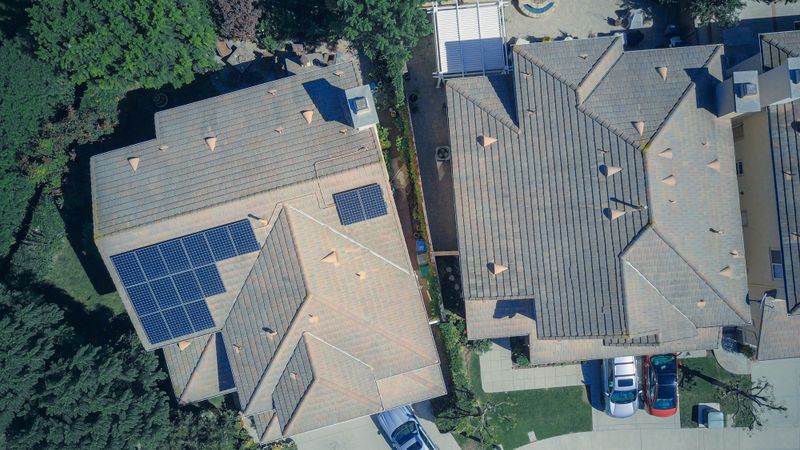
Say you want an 8,000 W system. With 400 W panels of 2.0 m² each, you need 20 panels, or 40 m² (about 430 square feet). With 480 W panels of the same size, you need 17 panels, or 34 m² (about 366 square feet). Higher efficiency saves roof, which matters most when roofs are small or shaded in places.
Why Are Some Solar Panels More Efficient Than Others?
The main reasons are cell material, cell design, and how many light layers a cell can use.
- Monocrystalline silicon: One pure crystal gives electrons a clean path. This is why most 20% to 24% home panels use it.
- Thin-film: Thin layers of material use less raw material and can suit large or flexible uses. Commercial thin-film modules generally sit lower in the efficiency range.
- Tandem cells: A second material, such as perovskite, sits on top of silicon. Each layer catches different colors of light. Experimental perovskite-silicon tandems have passed 30%.
- Multijunction cells: Three or more stacked layers, usually Group III-V materials, split the spectrum even further. Four-junction laboratory designs have reached up to 38%.
How Do Heat, Shade, Dirt, and Panel Angle Affect Efficiency?
All four lower real output below the rated number. Here is how each one works.
- Heat: Panels lose power as cells warm above 25°C. Datasheets list a temperature coefficient, often in the range of about -0.3% to -0.4% per °C. Hot roofs in summer lose more than cool, bright spring days.
- Shade: Even a small shadow on one cell can pull down a whole string of cells. Microinverters or optimizers limit the damage by treating each panel on its own.
- Dirt (soiling): Dust, pollen, and bird droppings block light. Rain clears most of it. Dry, dusty areas may need occasional cleaning.
- Angle and direction: In the US, south-facing roofs usually collect the most energy over a year. Tilt matters too, and the best tilt depends on your latitude.
- Aging: Panels slowly lose output each year. Check the warranty for the guaranteed rate.
Does a Higher-Efficiency Panel Always Produce More Electricity on a Roof?
No. Efficiency is a rate per square meter. Total output equals panel area times efficiency times the sunlight that really reaches it.
A 24% panel in shade can produce less than a 20% panel in full sun. A system with 12 high-efficiency panels can also produce less than one with 20 standard panels if the second system has more total watts. Compare total system size in kW and the expected annual kWh, not the percentage alone.
- If your roof is small or oddly shaped, shop 22% to 24% panels to reach your target kW.
- If your roof is large and open, compare cost per watt on standard 20% panels.
- If your roof is partly shaded, ask about module-level electronics before paying extra for efficiency.
How Efficient Are Solar Panels in Space?
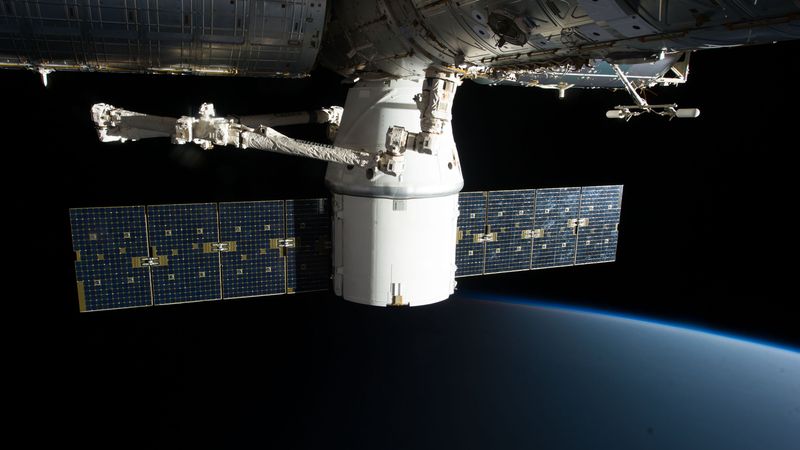
Space solar cells commonly deliver about 30% efficiency, compared with roughly 20% for terrestrial silicon cells. Small spacecraft and CubeSats can use cells above 32%. NASA’s SmallSat Institute power subsystems page covers these cells, and NASA’s overview of solar power use explains how the agency applies them.
Why are space solar cells more efficient than rooftop panels?
They use a different design. Current space-cell state of the art uses three- to five-junction Group III-V cells, with nominal efficiency near 30% and highs near 34%. Each junction captures a different slice of the spectrum. Rooftop silicon is a single junction, which is far cheaper to make.
The high price is the main reason these cells are not on homes. Space also brings problems your roof never faces. Eclipse periods interrupt power, radiation damages cells, contamination can coat surfaces, and performance degrades over the mission. Space cells are tuned for light weight, radiation tolerance, and reliability, not low cost.
What is the highest solar-cell efficiency currently achieved?
It depends on the definition. Four-junction laboratory architectures have reached up to 38%, and some reports put the best experimental cells close to 50%. These are lab results, often under special conditions. Do not expect them in a residential product. The numbers you can buy sit at 20% to 24%.
Is Paying for Higher Efficiency Worth It?
It is worth it when roof space is the limit and you want more kW from the same area. It is rarely worth it on a big, open roof, where cheaper panels can fill the space.
Use this checklist to read any efficiency claim:
- Is the figure for a single cell or a full module?
- Is it a laboratory record or a commercial product you can buy?
- Does it apply to terrestrial or space conditions?
- Was it measured under standard test conditions?
- What is the panel’s wattage, temperature coefficient, and degradation warranty?
- What is the price per watt, not just the efficiency?
Efficiency also says nothing about lifetime energy production. Two panels with the same rating can deliver different totals over 25 years depending on heat behavior, shade tolerance, and degradation. Ask installers for an annual kWh estimate based on your address.
Frequently Asked Questions
How efficient are solar panels?
Most commercial panels convert about 15% to 23% of sunlight into electricity. The rest becomes heat or is reflected.
How efficient are solar panels today?
Typical modern residential panels are commonly reported at about 20% to 24%. Laboratory cells go higher, but those are not sold for homes.
How efficient are solar panels in space?
Space cells commonly reach about 30%, with highs near 34%. Cells for small spacecraft can exceed 32%. They cost far more than rooftop panels.
What efficiency are solar panels?
Rooftop panels range from about 15% to 24%, depending on the technology and product line. The rating is measured under standard test conditions.
What percent efficient are solar panels?
A good modern home panel is about 20% to 24% efficient. At 20%, each square meter produces about 200 W under test conditions, before system losses.
What percentage efficiency are solar panels in a lab?
Experimental perovskite-silicon tandem cells have exceeded 30%. Four-junction laboratory cells have reached up to 38%, and some reports say the best experimental cells are approaching 50%. These are not commercial products.