
Many buyers grab a power bank with a small solar panel on the back and expect the sun to refill it. That rarely works. Solar phone chargers do work, because photovoltaic cells turn sunlight into DC power, but only a foldable panel of about 7 W or more gives useful speed, and even that is slower than a wall outlet.
Quick answer
Solar phone chargers work, but slowly and only in good sun. A 7 W foldable panel can add roughly 20% battery per hour in full sun. The tiny panel on a solar power bank is an emergency trickle at best.
- Best for weekend trips: a plain power bank, no panel
- Best for a week or more: foldable panel plus a separate bank
- Best for outages: a charged bank, with a panel as backup
- Rated watts are lab numbers. Expect about 50-70% of the rating in real sun.
- A 7 W panel in full sun adds roughly 20% to a phone per hour. Clouds cut that sharply.
- Built-in panels on power banks are about 1-2 W or less. Treat them as a gimmick.
- Charge a power bank with the panel, then charge the phone from the bank. This avoids stop-and-start charging.
- For trips under three or four days, a bigger power bank is cheaper and more reliable.
- How does a solar phone charger work?
- Do solar phone chargers work well, and how fast?
- Foldable panel or solar power bank?
- Do they work on cloudy days, indoors, or behind a window?
- Why is my solar phone charger not working?
- What wattage and battery capacity do you need?
- Are solar phone chargers worth it?
- Do solar chargers damage phone batteries?
- What to look for when buying
- What do owners say?
- Frequently Asked Questions
How does a solar phone charger work?
A solar phone charger works in four steps: cells catch sunlight, a controller steadies the power, a USB port delivers it, and an optional battery stores it. Everything is small, so the power is small too.
- Cells: Photovoltaic cells turn light into DC electricity. Consumer silicon cells convert about 15-22% of the sunlight that hits them. Monocrystalline cells sit at the high end. Flexible thin-film panels sit lower.
- Regulation: Raw panel voltage swings with light. A small circuit holds the output steady at the USB standard.
- USB output: USB-A is typically 5 V. USB-C PD panels can negotiate higher voltages, but they need strong sun to hold them.
- Battery (optional): A built-in or separate power bank stores the energy so your phone gets steady power.
Full sunlight on a surface facing the sun is about 1,000 W/m². That is the standard test condition used for panel ratings. Your backpack in a forest is not a test lab.
Do solar phone chargers work well, and how fast do they charge a phone?
They work well enough for topping up, not for fast charging. Based on typical specifications, a 7 W panel in clear sun adds about one fifth of a phone battery per hour.
Foldable chargers are commonly rated 5-28 W. Real output is usually well below the rating, often 50-70% or less, because of sun angle, heat and conversion losses. The table below turns ratings into phone numbers.
Worked example: how much sun does 50% take?
Assumptions you can redo yourself:
- Phone battery: 4,500 mAh at 3.85 V, about 17.3 Wh. Adding 50% means 8.7 Wh.
- About 20% is lost in the cable and phone charging circuit, so the panel must supply about 10.4 Wh.
- Real output in full sun is 60% of the rating. Hazy sun is half of that. Overcast is 15% of that, in line with the 10-25% of clear-sky output often cited for heavy cloud.
| Panel rating | Real output: full sun / hazy / overcast | Battery added per hour (full sun) | Time to add 50%: full / hazy / overcast |
|---|---|---|---|
| 2 W | 1.2 / 0.6 / 0.2 W | about 6% | 8.7 h / 17 h / about 58 h |
| 7 W | 4.2 / 2.1 / 0.6 W | about 20% | 2.5 h / 5 h / about 16 h |
| 15 W | 9.0 / 4.5 / 1.4 W | about 43% | 1.2 h / 2.3 h / about 8 h |
| 21 W | 12.6 / 6.3 / 1.9 W | about 60% | 0.8 h / 1.7 h / about 5.5 h |
Many phones cap how fast they accept power, so the 15 W and 21 W times are best cases. The panel must also stay in steady sun the whole time.
How long does it take to fully charge a phone with a solar charger?
With a 7 W panel, an empty 4,500 mAh phone needs about 5 hours of steady full sun (17.3 Wh plus 20% losses, divided by 4.2 W). On a real day with moving shade, plan on most of a day. With a 2 W panel, plan on two days or more.
What is the difference between a foldable solar panel and a solar power bank?
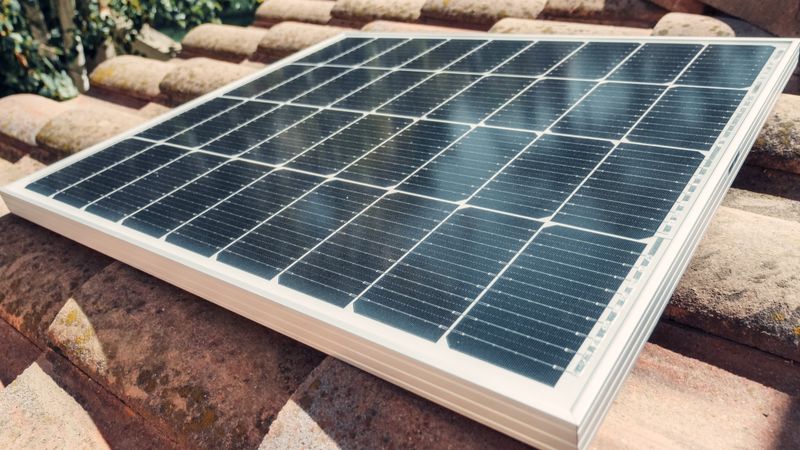
A foldable panel is a real power source. A solar power bank is a battery with a tiny panel added on top.
| Type | Typical panel size | Strength | Weakness |
|---|---|---|---|
| Foldable panel (5-28 W) | Large, folds to pack size | Meaningful output; kickstands and eyelets for packs | No storage; charging stops when sun drops |
| Solar power bank | About 1-2 W or less | One compact device | Recharging a 10,000+ mAh bank from the sun can take many days |
| Panel plus separate bank | Your choice | Steady phone charging; each part replaceable | Two items to carry |
Do they work on cloudy days, indoors, or behind a window?
They work, but badly. Overcast skies can cut output to roughly 10-25% of clear-sky output. Indoors, a panel gets almost nothing from room lighting.
A window helps a little. Glass blocks some light, so a panel behind a window loses output. Even then, it only works when the panel faces the sun directly. Shading a single cell on a small panel can sharply reduce current, so a shadow from a cord or a hand matters.
Why is my solar phone charger not working or charging slowly?
The cause is usually sun, angle or cable, not a dead panel. Check these in order, from most to least likely:
- Angle and shade. Point the panel straight at the sun and re-aim every hour or so. Quick test: cover one cell with your hand and watch the output drop.
- Cable. Thin, cheap cables waste power. Swap in a short, good-quality cable and compare.
- Haze, cloud or glass. Move the panel outside into open sun. If it charges outside and not inside, that is your answer.
- Heat. Silicon cells lose output as they heat up, and phones may slow charging when hot. Keep the phone in shade and the panel in sun.
- Stop-and-start charging. When the panel drops below the phone’s minimum voltage or current, charging cuts out, and some phones refuse intermittent power. Quick fix: plug the panel into a power bank, then the phone into the bank.
- USB-C PD mismatch. A PD panel may try to negotiate a high voltage and fail in weak light. Try a USB-A port on the panel if it has one.
- Failing hardware. Test the phone on a wall charger. A worn phone battery or a dead internal battery in a power bank can look like a bad panel. Cheap units also lose waterproofing and fail after a season or two.
What wattage and battery capacity do you actually need?
Match the setup to trip length. A phone uses roughly 17 Wh for a full charge, so a 10,000 mAh bank (37 Wh rated, less in real use) covers about one charge.
- Weekend (1-3 days): Carry a 10,000-20,000 mAh power bank. Skip the panel.
- One week: Bring a 7-15 W foldable panel plus a 10,000-20,000 mAh bank.
- Multi-week: Bring a 15-21 W panel and a 20,000 mAh bank. Charge the bank by day and the phone by night.
- Power outage: Keep a full power bank first. Add a panel as backup for day three and beyond.
Are solar phone chargers worth it?
They are worth it for multi-day trips with no outlet, and as outage insurance. They are not worth it for saving money. A full phone charge is about 0.0173 kWh, which costs roughly a third of a cent at the national average near 17 cents per kWh.
The real comparison is against a bigger power bank. These figures use assumed prices, so swap in current ones. Sun assumptions: 4 peak sun hours a day and 60% real output.
| Setup (assumed price) | Energy | Cost per usable Wh |
|---|---|---|
| 10,000 mAh bank ($25) | 37 Wh rated, about 24 Wh usable (65%) | about $1.04 |
| 20,000 mAh bank ($40) | 74 Wh rated, about 48 Wh usable | about $0.83 |
| 21 W foldable panel ($60) | about 50 Wh a day, about 350 Wh over 7 days | about $0.17 over a week |
| 21 W panel plus 10,000 mAh bank ($85) | Same energy, with storage | about $0.24 over a week |
The panel wins on a week-long trip because it keeps producing. On a weekend, the bank wins because it works in any weather and costs less.
Do solar chargers damage phone batteries?
A quality solar charger does not harm a phone battery. The phone controls how much power it accepts. The risks are cheap, unregulated units and heat. Do not leave a phone baking on a dashboard or in direct sun while it charges.
Use only small USB panels with phones. Never join them to household wiring or use extension cords to extend a setup, and call a licensed electrician for any home solar work.
What should you look for when buying a solar phone charger?
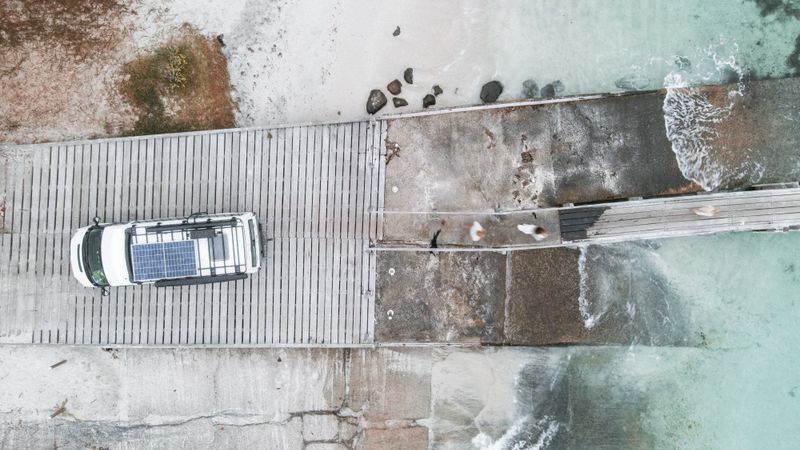
- Rated output of 7 W or more. Smaller panels are too slow to matter.
- Output ports. USB-A is simple and reliable. USB-C PD is useful if the panel holds voltage in weaker light.
- A separate power bank. It smooths out cloud and shade.
- Weatherproofing. Look for a stated water-resistance rating and sealed seams.
- Carry features. Kickstands, eyelets and carabiner loops make hanging it from a pack easy.
- Cell type. Monocrystalline cells are more efficient than thin-film for the same size.
- Honest specs. Be wary of capacity claims that look too big for the price.
What do owners say?
Owners like
- Foldable panels with a separate power bank are useful on multi-day hikes and camping trips
- Kickstands, eyelets and carabiner loops make panels easy to attach to a pack
- Lightweight panels in good sun can keep a phone topped up for basic use
- Peace of mind as a backup during power outages
Common complaints
- Built-in panel power banks barely charge from the sun and take days
- Output is much lower than the advertised wattage
- Charging keeps stopping and starting when clouds or shade pass over
- Cheap units fail or lose waterproofing after a season or two
- Overstated capacity claims on cheap solar power banks
Summarised from owner reviews and long-term user reports; individual experiences vary.
Frequently Asked Questions
Do solar phone chargers work?
Yes. Photovoltaic cells turn sunlight into DC power that charges your phone directly or through a battery. Speed depends on panel size, sun strength and angle.
How do solar chargers work?
Cells collect sunlight and make DC electricity. A small circuit regulates it to USB levels, and the USB port feeds your phone or a power bank.
Do solar phone chargers work well?
A 7 W or larger foldable panel works well enough in clear sun for topping up. Small built-in panels on power banks work poorly and can take days to recharge the bank.
How well do solar phone chargers work in real use?
Real output is often 50-70% of the rating or less. A 7 W panel gives about 4 W in good sun, which is roughly 20% battery per hour for a typical phone.
Are solar phone chargers worth it?
They are worth it for trips of a week or more and as an outage backup. For short trips, a larger power bank costs less and works in any weather.
Why is my solar phone charger not working?
Check panel angle and shade first, then the cable, then cloud, haze or glass. Heat, a voltage mismatch and failing hardware come next. Charging a power bank first fixes most stop-and-start problems.