
Many people think they need a separate off-grid array for their car, but you should just route solar electricity through a standard home inverter and EV charging station. It takes just 7 to 12 solar panels (3 to 4 kW) to cover the charging needs of an EV driven 40 miles daily. This setup powers your commute directly from the sun, which sharply drops your household energy bills.
Quick answer
You can charge an electric vehicle with solar power by connecting your rooftop array to your home’s main electrical panel and a dedicated Level 2 charger. For an average US commute of 40 miles per day, you need roughly 7 to 12 standard residential solar panels to generate the 10 to 12 kWh of electricity required.
- An average 40-mile daily commute requires 10 to 12 kWh of energy, met by a 2.5 kW to 3.5 kW solar array.
- You cannot plug an EV directly into a solar panel; the power must flow through an inverter first.
- Smart EV chargers can track excess solar production and adjust the charge rate automatically.
- If you charge at night, you must rely on grid net metering or a home solar battery.
- Can solar panels charge an EV?
- Can you charge an electric car directly from solar panels?
- How many solar panels to charge EV?
- What kind of EV charger do I need for a solar setup?
- Do I need a home battery to charge my EV at night?
- What happens on cloudy days or during winter?
- Is it cheaper to charge an EV with solar power than grid power?
- Hardware Compatibility Checklist
- What do owners say?
- Frequently Asked Questions
Can solar panels charge an EV?
Yes, solar panels easily charge an electric vehicle when properly connected to your home’s electrical system. The energy generated on your roof travels down to an inverter, enters your main breaker panel, and flows into your EV charging station.
Most residential setups work by treating the EV exactly like any other heavy home appliance, such as an air conditioner or electric oven. When the sun shines, your panels generate direct current (DC) electricity. The inverter changes this to alternating current (AC) electricity for your home. If your EV is plugged in, it pulls that AC power to recharge its battery.
Can you charge an electric car directly from solar panels?
No, you cannot safely or easily plug an electric vehicle directly into a single solar panel or string of panels. The power must undergo a specific conversion process to protect the vehicle’s battery and computer systems.
Solar panels produce variable DC power based on cloud cover and sun angle. EV batteries store DC power, but they require a very stable, highly controlled voltage. Because of this, standard residential setups use a “DC-to-AC-to-DC” conversion process. The home inverter changes the solar DC to grid-standard AC power. Then, the EV’s onboard charger takes that AC power and converts it back to the exact DC voltage the car’s battery needs.
From the Shop
We often hear from homeowners who want to bypass their electrical panel and wire a solar array directly into a DC fast-charge port on their EV. EV charging systems require digital communication between the charger (EVSE) and the vehicle to initiate safety relays. Without a proper inverter and EVSE to negotiate the charge, the vehicle’s onboard computers will immediately block the current to prevent battery damage.
How many solar panels to charge EV?
On average, it takes 7 to 10 standard solar panels to charge an EV for daily driving. This calculation depends heavily on three factors: how far you drive, how efficient your specific EV model is, and the average peak sun hours in your US state.
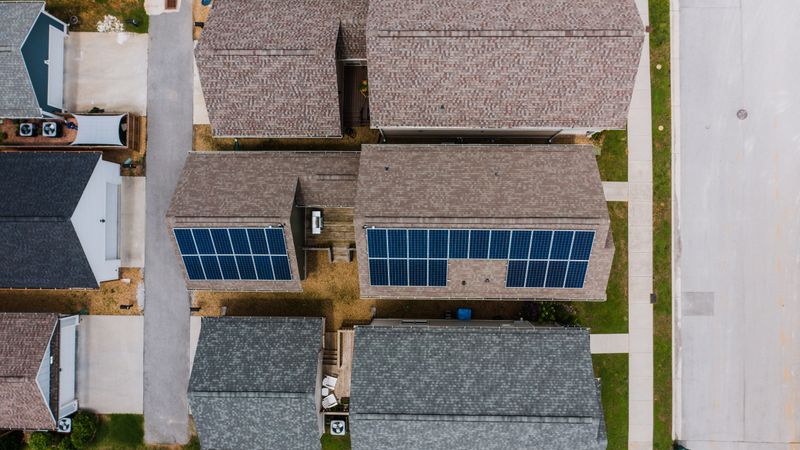
The average US driver travels about 40 miles per day. A typical electric car consumes about 30 kWh to travel 100 miles, which breaks down to 3 to 4 miles per kWh. Therefore, a 40-mile daily commute requires about 10 to 12 kWh of electricity to replenish.
To generate 10 to 12 kWh per day, you need a 2.5 kW to 3.5 kW solar array. Assuming a standard modern residential solar panel produces between 350W and 400W of power, and you receive about 4 US peak sun hours a day with normal system losses, that equates to roughly 7 to 10 panels strictly for the vehicle.
| Daily Commute | Energy Needed (Sedan e.g., Model 3) | Energy Needed (Truck e.g., F-150 Lightning) | Estimated Panels Needed (350W-400W) |
|---|---|---|---|
| 20 miles | ~5 kWh | ~10 kWh | 3 to 8 panels |
| 40 miles | ~10 kWh | ~20 kWh | 7 to 15 panels |
| 60 miles | ~15 kWh | ~30 kWh | 10 to 22 panels |
*Assumes an average of 4 peak sun hours per day and 15% system loss. Efficiency varies based on exact vehicle specifications.
What kind of EV charger do I need for a solar setup?
You can use a standard Level 2 EV charger, but a smart EV charger with “solar diversion” capabilities offers much better performance. Smart chargers dynamically adjust their output to match your exact solar surplus.
Standard Level 2 home chargers operate on a 240V circuit and pull anywhere from 3.8 kW to 11.5 kW of constant power. If your solar panels are only producing 3 kW on a sunny afternoon, a standard charger running at 7.6 kW will pull the remaining 4.6 kW from the utility grid. You pay for that extra grid power.
Chargers with solar diversion technology (like Zappi, SolarEdge, or Wallbox) monitor the electrical panel. If they see 3 kW of excess solar going back to the grid, they tell the car to charge at exactly 3 kW. If a cloud passes over and solar output drops to 1 kW, the charger throttles the car down to 1 kW. This ensures the car charges entirely on free sunshine.
Do I need a home battery to charge my EV at night?
You do not strictly need a home battery to charge your EV at night if you have a favorable net metering agreement with your utility company. However, if your utility lacks net metering, a battery becomes highly valuable.
The core problem with solar EV charging is a lifestyle mismatch: solar panels generate maximum power at midday, but most people park their cars at the office during that time. They plug their cars in at night when the sun is down.
- If you have 1:1 Net Metering: Send your excess midday solar to the grid for full retail credit. At night, pull grid power to charge your EV using those banked credits. No home battery needed.
- If you have Time-of-Use (TOU) or low export rates: The utility pays you pennies for midday solar but charges you high rates at night. In this case, install a home battery to store your midday solar power, then dump that battery into your EV at night.
What happens on cloudy days or during winter?
During cloudy days or short winter months, your solar panels generate less energy. The EV charging system will automatically pull electricity from the local utility grid to make up the difference.
One detail to watch for is charger timeouts. If you run a smart charger strictly in “solar only” mode, heavy cloud cover might drop solar production below the minimum charging threshold of the EV (often around 1.4 kW). Some EVs will pause the charge and may require you to manually restart the session from your smartphone app once the sun returns.
Is it cheaper to charge an EV with solar power than grid power?
Yes, charging an EV with solar power is significantly cheaper than using grid electricity over the long term. While buying the panels requires an upfront cost, the daily cost of fuel becomes virtually zero.
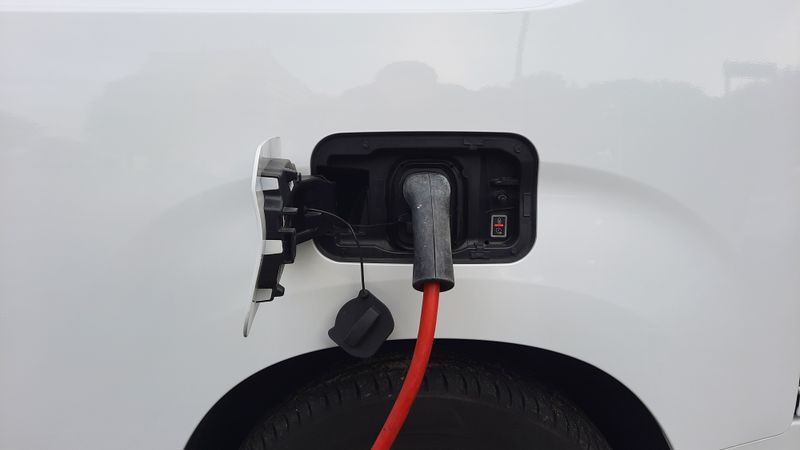
According to the U.S. Energy Information Administration, the national average electricity rate is roughly 17 cents per kWh, with some states seeing rates as high as 40 cents. If you drive 40 miles a day (using 12 kWh), charging from the grid at 17 cents per kWh costs about $2.04 per day, or $744 a year. If you live in a state with 35-cent electricity, that cost jumps to over $1,500 a year.
When you use an existing solar array to cover that demand, you avoid those grid fees completely. Because solar panels typically last 25 years, the long-term savings heavily outweigh the cost of the extra panels.
Hardware Compatibility Checklist
Before adding an EV charger to an existing solar array, you need to verify a few system requirements. Any electrical work of this scale requires a licensed electrician. Never attempt to bypass a microinverter’s grid shut-off or use standard extension cords to charge an EV.
- Panel Capacity: Does your main breaker panel have physical space and load capacity for a 240V, 40-to-60-amp circuit?
- Inverter Integration: Is your current solar inverter compatible with smart EV chargers that offer solar diversion?
- Local Regulations: Plug-in solar and backfeeding rules vary widely by state. Always confirm your specific setup and net metering terms with your local utility provider.
What do owners say?
Owners like
- The satisfaction of zero-emissions commuting and driving on pure sunshine
- Massive reduction in monthly electricity bills
- Smart chargers (like Zappi or Wallbox) make capturing excess solar completely automated
Common complaints
- Frustration with the inability to utilize solar charging when parked at the office during peak sun hours
- High upfront cost of adding a home battery simply to store solar for nighttime EV charging
- Irregular charging speeds during partially cloudy days triggering charger timeouts on some EV models
Summarised from owner reviews and long-term user reports; individual experiences vary.
Frequently Asked Questions
Can solar panels charge EV?
Yes, solar panels can successfully charge an EV. The solar energy flows through an inverter to convert it to AC power, which then supplies your home’s electrical panel and your dedicated EV charging station.
How many solar panels to charge EV?
Generating the 10 to 12 kWh of daily energy needed for a standard 40-mile commute requires a 2.5 kW to 3.5 kW solar array. This equates to roughly 7 to 10 standard solar panels (rated between 350W and 400W each) under average peak sun conditions.
Can you charge EV with solar panels?
Yes, you can charge an EV with solar panels as long as the system routes through an inverter. You cannot simply plug a car into raw panels; the vehicle requires specialized communication and precise voltage management provided by a home EV charger.
How to charge EV using solar panels?
To charge an EV using solar panels, you plug your car into a standard Level 2 home charger that is wired into your home’s main electrical panel. A smart charger with solar diversion technology can be programmed to only charge the car when your panels are producing excess electricity.
Charging EV solar panels
Charging an EV with solar panels is a highly effective way to eliminate fuel costs. The system relies on daytime solar generation to power the car directly, or utilizes grid net metering to offset the cost of charging the vehicle at night.
Can you charge an electric car directly from solar panels?
No, you cannot safely connect an electric car directly to solar panels. The raw DC power from panels fluctuates constantly. It must be converted into AC power by a home inverter, and then passed through an EV charging unit to safely manage the voltage going into the car’s battery.