Unfold the panel in direct sunlight, aim it at the sun, and plug it into a device or power station that accepts its voltage and wattage. That is the whole job. Results depend on angle, shade, connectors, and input limits, and this guide covers each one in plain steps.
Quick answer
Set the panel on a stable surface in unshaded sun and tilt it toward the sun. Connect it to a compatible power station first, then charge your devices from the station. Expect well under the label wattage, because clouds, angle, heat, and losses all cut output.
- Best for camping: a foldable panel, light and easy to pack
- Best for rough use: a rigid glass suitcase panel
- Charging a power station first is steadier than plugging a device straight into the panel.
- Shading even one part of a panel can drop output sharply.
- Matching connector shape does not prove the voltage and amperage are compatible.
- Water-resistant panels do not make exposed connectors or power stations waterproof.
- A small foldable panel cannot charge an electric car directly.
- How do portable solar panels work?
- How do I use a portable solar panel step by step?
- Power station or direct device charging?
- How should I position and angle a portable solar panel?
- Realistic output: a worked example
- Which devices match which panel?
- What can portable solar panels be used for?
- Pre-use checklist
- How do I clean portable solar panels?
- Can portable solar panels get wet?
- Can portable solar panels charge an electric car?
- Which portable solar panel is best?
- Troubleshooting low or zero output
- What do owners say?
- Frequently Asked Questions
How Do Portable Solar Panels Work?
A portable solar panel turns sunlight into DC electricity through photovoltaic cells. That power travels down a cable to a device or a power station, which either uses it or stores it in a battery.
The panel is rated in nominal watts. That number comes from standard lab conditions. In your backyard, output moves with sunlight strength, angle, temperature, shade, and system losses. So portable panels work best as daytime chargers, not as constant power sources.
Construction varies. Some panels use glass and aluminum for durability. Foldable fabric-backed designs trade some toughness for lower weight and easier storage, according to the product information on both types.
How Do I Use a Portable Solar Panel Step by Step?
Unfold, position, connect, monitor, and store. Follow this order every time.
- Pick the spot. Look for open ground with no shade from trees, rails, buildings, or your own body for the next few hours.
- Unfold and stabilize. Open the panel fully. Use the built-in stand or legs. Weigh down the edges if there is wind, since a tipped panel can crack or pull on its cable.
- Aim it. Tilt the panel so it faces the sun squarely. More on that below.
- Connect to the power station or device. Check the input rating first. Plug in the panel’s own cable. Do not link household extension cords into the path.
- Monitor. Most power stations show input watts on a screen. Watch it for a few minutes and adjust the angle.
- Re-aim through the day. The sun moves. A panel left alone for four hours will drift off target.
- Disconnect, dry, fold, and store. Wipe off dew or dust, fold along the hinges, and keep it in its case.
Power Station or Direct Device Charging?
Charge a power station first when you can. Panel output swings as clouds pass, and many phones and laptops handle that badly. A power station smooths the input and stores energy for the evening.
Direct charging works for small items, such as a phone through a panel’s USB port. The panel’s maximum output must stay within the device’s input range, as the manufacturer manuals stress. Check the specifications in the EcoFlow 60W portable solar panel manual to see how one maker spells out ports and limits.
- Charging a phone or small light in steady sun: direct USB from the panel can work.
- Charging a laptop, camera batteries, or a cooler: go through a power station.
- Running anything overnight: you need a battery. A panel alone gives nothing after sunset.
How Should I Position and Angle a Portable Solar Panel?
Face the panel toward the sun and tilt it until sunlight hits it straight on. A perpendicular angle gives the most output. One manufacturer guide uses a shadow-based angle indicator to help you find it: when the shadow lines up as shown, the panel is square to the sun.
No indicator? Use this shortcut. Look at the shadow of the stand or a pencil held upright against the panel. The shorter the shadow on the panel’s face, the better aimed it is.
In the US, the sun sits lower in winter, so tilt the panel steeper. In summer, lay it flatter. Peak sun hours run roughly 3 to 6 per day depending on your state and season.

Do Portable Solar Panels Work on Cloudy Days?
Yes, but at lower output. Cloud and rain cut production, and shade, dust, and leaves can reduce it substantially. Expect a fraction of rated watts under heavy overcast. Partial shade is often worse than you would guess, because shading part of a panel can pull down the whole panel’s output.
Realistic Output: A Worked Example
A 200W panel can theoretically supply 200Wh in one peak sun hour. Real charging time depends on losses, weather, angle, and the power station’s input limit.
Here are the assumptions, so you can redo the math:
- Panel: 200W nominal
- Peak sun hours: 5 (a decent day in much of the US)
- System losses: 25 percent (heat, cables, charge conversion)
- Electricity price: 17 cents per kWh (national average near that, per the U.S. Energy Information Administration; state prices range roughly 12 to 40 cents)
Calculation: 200W × 5 hours × 0.75 = 750Wh, or 0.75 kWh. That is about 13 cents of grid electricity at 17 cents per kWh.
Notice what that means. A portable panel will not cut your electric bill in any real way. Its value is power where there is no outlet. A 1,000Wh power station would need roughly 1.3 days like this to fill from empty.
Now check the input limit. If your station accepts only 100W of solar input, the 200W panel cannot push more than 100W into it. Best case that is 500Wh over 5 hours before losses. Extra panel wattage past the limit mostly goes unused.
Which Devices Match Which Panel?
This table gives rough guidance. Always confirm against your device’s input rating.
| Device | 60W panel | 100W panel | 200W panel |
|---|---|---|---|
| Phone | Yes, direct or via station | Yes | Yes |
| Laptop | Slow, via station | Yes, via station | Yes, via station |
| Camera batteries | Yes, via station or USB charger | Yes | Yes |
| Portable power station | Slow top-up | Good for small stations | Good if input limit allows 200W |
| Refrigerator | No | Small 12V fridge, with battery | Needs power station and inverter; daytime only without storage |
| Electric car | No | No | No direct charging |
What Can Portable Solar Panels Be Used For?
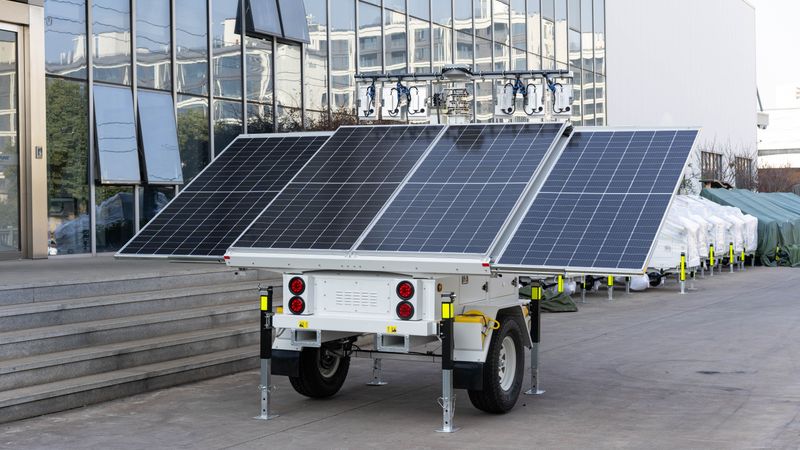
They charge phones, tablets, cameras, lights, and power stations. Common settings include camping, RV trips, boats, emergency kits, and outages at home.
Can I Use a Portable Solar Panel at Home?
Yes. Set the panel on a patio, yard, or sunny balcony and connect it to a power station. This gives you backup power for phones, Wi-Fi gear, lights, and a laptop during an outage. Check your lease or HOA rules before mounting anything on a rail.
Pre-Use Checklist
- Sun: open sky, no shade for the next few hours
- Shade check: no shadow from poles, rails, or branches on any part of the panel
- Connectors: clean, dry, fully seated
- Voltage range: panel voltage and amperage inside the device’s input limits
- Stability: stand locked, edges weighted against wind
- Cable strain: no tight bends or tugging; cable routed away from foot traffic
- Weather: no rain expected, or ports and station covered and dry
How Do I Clean Portable Solar Panels?
Brush off loose dust and leaves first, then wipe with a soft damp cloth and a little mild soap. Dry it before you fold it.
- Disconnect the cable before cleaning.
- Skip abrasive pads, harsh solvents, and pressure washers, which can scratch coatings or push water into seams.
- Keep water away from connectors and junction areas.
- Clean the hinges and fabric edges gently, and let everything dry fully before storage to avoid mildew.
Can Portable Solar Panels Get Wet?
Many can handle light rain, but check the rating. An IP rating describes resistance to dust and water ingress, and you should still protect connectors, ports, and attached equipment from water unless their own ratings allow exposure, as the manufacturer manuals indicate.
Separate the pieces in your head: the panel surface, the cable plugs, and the power station. A water-resistant panel does not make a power station rain-proof. Keep the station under cover and the connections dry.
Can Portable Solar Panels Charge an Electric Car?
Not directly. A small foldable panel cannot practically charge an EV. Cars need much more power and proper charging electronics. Portable solar EV systems typically combine panels with a battery, an inverter, and a charge controller, as explained on this portable solar EV charger overview.
Do the math. A 200W panel making about 750Wh on a good day adds only a few miles of range for most EVs. It could help top off a battery bank, but it is no substitute for a home charger.
Which Portable Solar Panel Is Best?
The best panel is the one that matches your power station’s input range, your carrying limit, and your use. Look at wattage, weight, foldability, durability, ingress rating, warranty, and connector type. For lab-style comparisons of specific models, see Field & Stream’s tested panel roundup.
| Type | Portability | Durability | Setup effort | Best use |
|---|---|---|---|---|
| Folded fabric-backed panel | High; light and packs flat | Moderate; hinges and stitching can wear | Low | Backpacking, car camping, phones |
| Rigid suitcase panel (glass and aluminum) | Lower; heavier and bulkier | High | Low to moderate | RVs, home backup, rough handling |
| Higher-wattage panel (200W and up) | Lowest | Varies | Moderate | Larger power stations, longer stays |
Three buying rules: check the station’s maximum solar input before choosing wattage; confirm the connector, or buy the right adapter; and read the warranty and ingress rating on the product page.
Troubleshooting Low or Zero Output
- Zero input: reseat the connectors, check the cable, and confirm the station’s solar input is the one you plugged into.
- Low input: remove shade, re-aim the panel, wipe off dust, and wait for clouds to pass.
- Input stuck at a cap: the station’s input limit is probably the cause.
- Hot day, lower output: heat reduces panel efficiency. Make sure air can flow behind it.
- Still nothing: test with another cable or device. If the panel stays dead, contact the maker under warranty.
What do owners say?
Owners like
- Foldable designs are easy to pack, carry, and deploy for camping or emergency charging.
- Rigid glass-and-aluminum suitcase panels feel durable and tolerate rough handling.
- Built-in stands and adjustable legs make aiming at the sun easier.
- Charging compatible power stations works reliably in strong direct sunlight.
Common complaints
- Output drops quickly when part of the panel is shaded.
- Fabric hinges, stitching, and fold points can wear after repeated heavy use.
- Panels, especially glass ones, are often heavier and bulkier than the wattage suggests.
- Connectors or voltage limits do not match some power stations.
- Dust, rain, poor angle, and clouds give slower charging than expected.
Summarised from owner reviews and long-term user reports; individual experiences vary.
Frequently Asked Questions
Do portable solar panels work?
Yes, in daylight. They charge phones and power stations well in strong sun. They do not run heavy loads alone, and output falls with clouds, shade, and poor angle.
How does portable solar panels work?
Photovoltaic cells convert sunlight into DC power. The panel sends it through a cable to a device or power station, which uses or stores it.
How to use portable solar panels at home?
Place the panel in full sun on a patio or yard, aim it at the sun, and connect it to a power station. Use the station for outages and small electronics. Ask a licensed electrician about any link to home wiring, and confirm local rules with your utility.
What portable solar panel is best?
Choose by your power station’s input range, your weight limit, and durability needs. Foldable suits hiking and camping. Rigid glass suits RVs and home backup.
Can you use portable solar panels to charge an electric car?
Not directly. EVs need far more power and proper electronics. Systems that work usually add a battery, inverter, and charge controller.
Can portable solar panels get wet?
Some resist light rain according to their IP rating, but keep connectors, ports, and your power station dry unless their own ratings allow exposure.
How to clean portable solar panels?
Disconnect, brush off loose debris, and wipe with a soft damp cloth and mild soap. Avoid abrasives and pressure washers, and dry fully before folding.
Sources